Family camping trips create lasting memories, but keeping everyone safe and connected in the outdoors can be a challenge. Cell phones often fail due to weak signals in remote areas, leaving parents worried when kids explore nearby trails or playgrounds.
Walkie talkies solve this problem. They provide instant, reliable two-way communication without needing service or Wi-Fi. This complete guide explains how to use walkie talkies for family camping trips. It covers everything from choosing the right equipment to practical tips and fun activities.
Whether you are new to two-way radios or looking to improve your setup, this article delivers clear, step-by-step advice designed for real families.
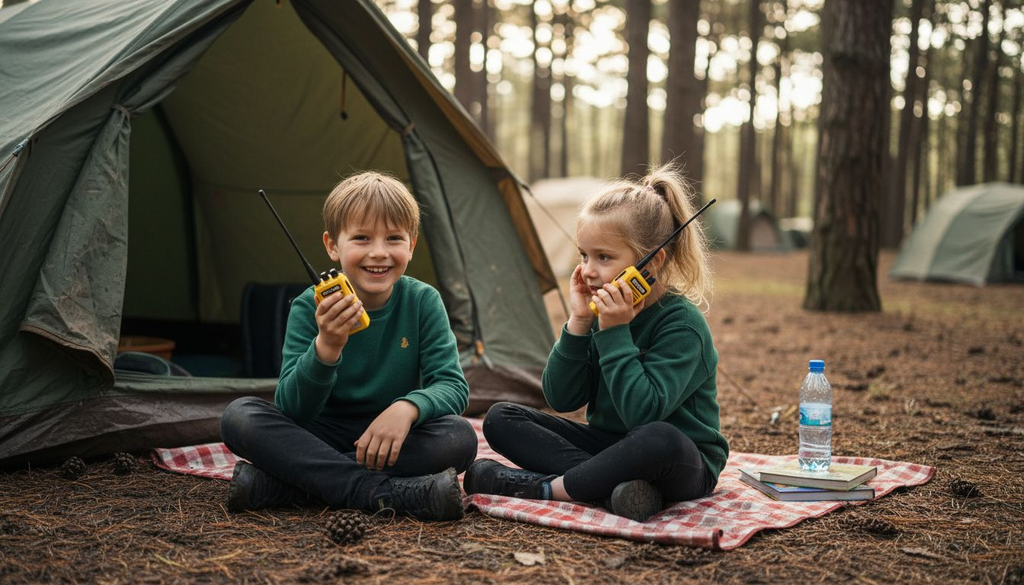
Why Walkie Talkies Make Family Camping Trips Safer and More Enjoyable
Walkie talkies, also known as two-way radios, let family members talk directly over short distances using radio frequencies. Unlike phones, they work in forests, mountains, and campgrounds where cellular coverage is poor.
They promote independence for kids while giving parents peace of mind. Key benefits include:
- Instant communication — Press a button and speak. No dialing or waiting for a call to connect.
- Reliability in nature — They operate on Family Radio Service (FRS) or General Mobile Radio Service (GMRS) bands, which do not rely on cell towers.
- Built-in safety features — Many models include NOAA weather alerts, flashlights, and emergency signals.
- Family bonding — They turn routine check-ins into exciting shared moments.
Real-world conditions matter. Advertised ranges of several miles often drop to a few hundred feet in dense woods or hills. A solid 1,000-foot range, however, works perfectly for most family campsites. Walkie talkies also encourage responsibility.
Kids learn to follow rules, use clear language, and stay aware of their surroundings.
Choosing the Right Walkie Talkies for Family Camping
Not all walkie talkies suit family camping. Focus on models built for kids and casual outdoor use rather than professional or toy versions.
Prioritize lightweight designs that fit small hands, simple controls, and durable construction that handles dirt, rain, and drops.
Here is a short table of essential features to consider:
| Feature | Why It Matters for Family Camping Trips | What to Look For |
|---|---|---|
| Range | Keeps kids connected during short explorations | At least 1,000 feet in real conditions |
| Kid-Friendly Design | Easy for children ages 3–10 to operate | Large buttons, lightweight body |
| Battery Life | Lasts through full days without recharging | Rechargeable or easy-to-replace AA/AAA |
| Durability | Survives rain, dirt, and rough play | Water-resistant (IPX4 or better) |
| Extra Features | Adds safety and convenience | VOX (hands-free), flashlight, NOAA alerts |
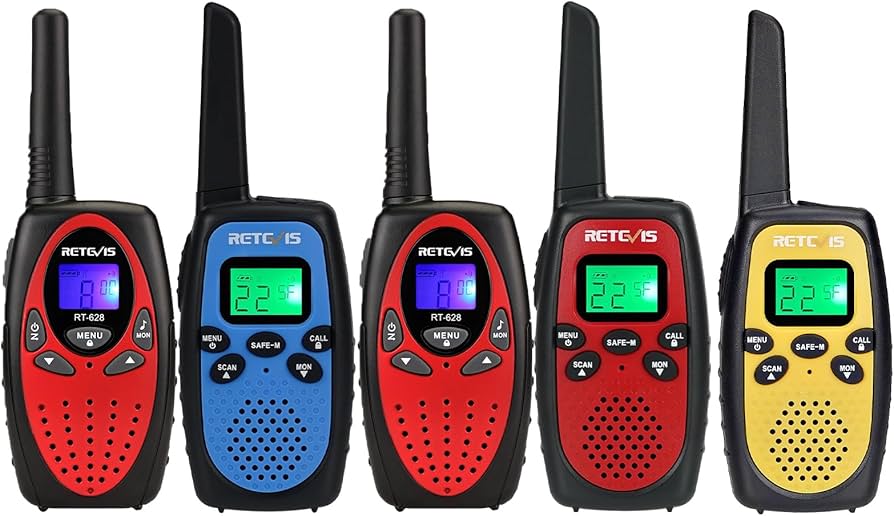
For the best balance of performance, ease of use, and value on family camping trips, choose the Kids Walkie Talkies from Horizon Plus Trading. These offer a reliable 1,000-foot range, clear voice quality, simple kid-friendly buttons, and a lightweight design perfect for ages 3–10.
They include hanging straps for easy carrying and work great for both indoor games and outdoor adventures. You can find them here
Step-by-Step | How to Use Walkie Talkies on Your Camping Trip
Using walkie talkies is straightforward. Follow these steps to set up and operate them safely and effectively.
- Prepare the devices — Insert fresh batteries (or charge rechargeable models) before leaving home. Test them at home first to confirm they work.
- Turn on and sync — Press the power button on each unit. All family members should select the same channel (usually numbered 1–22 on FRS models). Avoid default channels if they feel crowded.
- Set privacy codes if available — These reduce interference from other users on the same channel. Choose a code together and note it down.
- Test the range at camp — Walk to common spots like the playground, bathroom, or trailhead. Speak clearly and check signal strength. Mark any “dead spots” on a simple campsite map.
- Use proper technique — Hold the walkie talkie 2–3 inches from your mouth. Press and hold the talk button, wait one second, then speak. Say “over” when finished so others know it is their turn. Release the button to listen.
- Enable hands-free mode (VOX) — For activities like hiking or climbing, switch to voice-activated transmission so hands stay free.
- Monitor battery and weather — Check levels daily. Use NOAA alerts to stay ahead of storms.

Practice these steps once at camp so everyone feels confident. Teach kids to keep messages short and clear: “Mom, I’m at the playground. Over.”
Safety Tips and Best Practices for Family Camping
Safety comes first on every trip. Establish these rules before you leave:
- Agree on one main channel and one backup.
- Set check-in times (for example, every 30 minutes when kids are away from camp).
- Create simple code words for emergencies, such as “Code Red” for immediate help.
- Store walkie talkies in a dry bag or pouch when not in use.
- Never leave them in direct sunlight or near water without protection.
Discuss real-world limitations. Thick trees or hills reduce range, so plan activities within sight or tested distance. Always carry a backup plan, such as a whistle or meeting point.
Fun Activities That Make Walkie Talkies Part of the Adventure
Walkie talkies turn camping into an interactive experience. Try these family-friendly games:
- Scavenger Hunt — One person hides clues and guides others via radio.
- Trail Relay — Teams pass messages along a short hiking path.
- Nature I-Spy — Describe animals or plants you see and let others guess.
- Camp Check-In Stories — Share what you found during solo exploration.
These activities build teamwork, listening skills, and excitement while keeping everyone connected.
Troubleshooting Common Walkie Talkie Issues
Even the best equipment can have hiccups. Here are quick fixes:
- Weak or no signal — Move closer or to higher ground. Change channels or privacy codes.
- Static or interference — Switch to a less crowded channel or adjust the squelch setting if available.
- Dead battery — Carry spares or a portable charger.
- Sound too quiet — Check volume and speak closer to the microphone.
Regular cleaning with a soft cloth prevents dirt from affecting performance.
Frequently Asked Questions
Final Thoughts
Walkie talkies transform family camping trips from potentially stressful to confidently fun. They provide freedom, safety, and shared adventure without relying on phone service.
By following the steps, tips, and recommendations in this guide, you will communicate clearly and enjoy every moment outdoors.
Ready to upgrade your gear? The Kids Walkie Talkies from Horizon Plus Trading deliver everything a family needs—long range, kid-friendly design, and reliable performance—for unforgettable camping trips. Grab your set today and start planning your next adventure with confidence.