Choosing the right cat litter box is one of the most important decisions a cat owner makes. It directly affects your cat’s health, comfort, and behavior.
It also affects how clean and odor-free your home stays. Yet most owners pick the first box they see on a shelf without thinking about their cat’s needs.
This guide covers everything you need to know about cat litter boxes: the main types, how to choose the right size, where to place the box, how to clean it, and how to train a kitten. Whether you have one cat or five, this guide gives you clear, practical advice you can use today.
Why the Right Cat Litter Box Matters
A cat that dislikes its litter box will find somewhere else to go. That means accidents on your carpet, bedding, or floor.
According to veterinarians, litter box problems are one of the most common reasons cats are brought to the vet or surrendered to shelters.
The good news is that most litter box problems are easy to fix once you understand what cats need. Cats are clean animals by nature. They are also creatures of habit. Give them the right box in the right place, keep it clean, and they will use it consistently.
Types of Cat Litter Boxes: A Full Breakdown
There are six main types of cat litter boxes. Each has advantages and drawbacks. The right choice depends on your cat’s age, personality, and your home setup.
1. Open / Standard Litter Pan
An open litter pan is a simple plastic tray with no lid. It is the most widely used cat litter box type, and for good reason. Most cats accept
it without hesitation because they can see their surroundings while using it. This reduces anxiety, especially in cats that feel vulnerable in enclosed spaces.
Open pans are affordable, easy to find, and simple to clean. They allow airflow, which helps reduce odor buildup inside the box. The main downside is that litter scatter is harder to contain, and smells enter the room more freely.
Best for: Kittens, senior cats, anxious cats, and multi-cat households.
2. Covered / Hooded Litter Box
A hooded litter box has a lid or cover over the top. It gives your cat more privacy and helps contain litter scatter. Many hooded models include a charcoal filter to reduce odors escaping into the room.
However, odors can build up inside the box itself, which cats find unpleasant. Some cats refuse to use covered boxes entirely. If you choose a hooded design, you must scoop it daily, or your cat may avoid it. Enclosed boxes can also make it harder for dogs and young children to access the litter.
Best for: Privacy-seeking cats, households with dogs or toddlers, and owners who want to reduce visible litter scatter.
3. Top-Entry Litter Box
A top-entry litter box is a container with a hole in the lid. The cat jumps down into the box from above.
This design is excellent at containing litter because the cat steps on a textured lid surface on the way out, which knocks excess litter off their paws.
Top-entry boxes are not suitable for kittens, senior cats, or any cat with mobility issues. They work best for athletic, adult cats who are confident jumpers.
Best for: Energetic adult cats, households where litter scatter is a major concern, and homes with nosey dogs.
4. Self-Cleaning / Automatic Litter Box
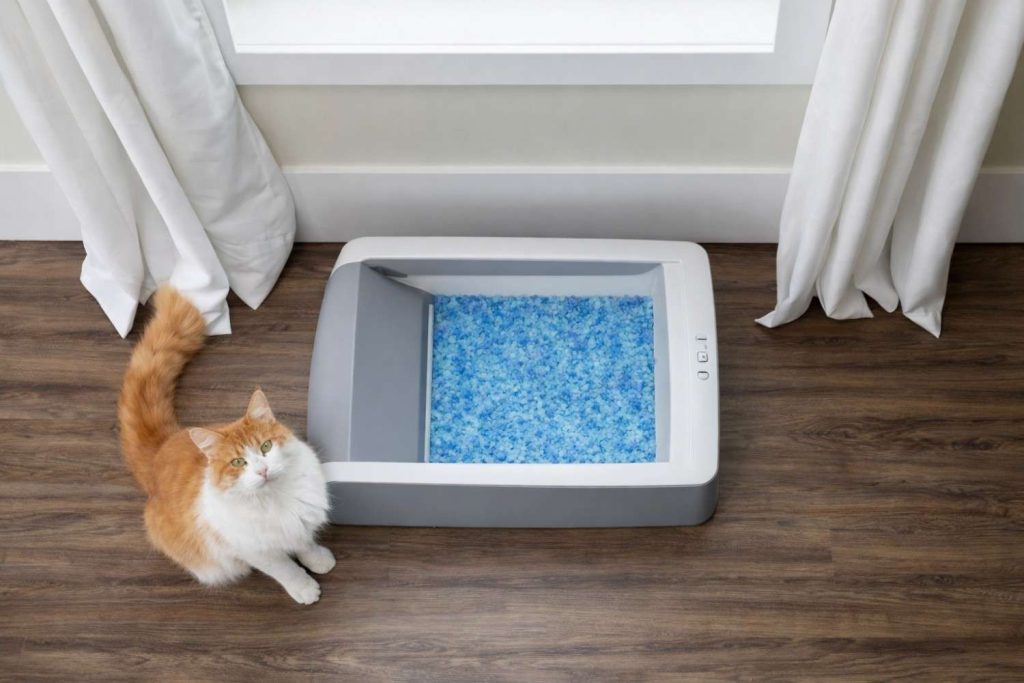
A self-cleaning litter box uses sensors, rakes, or rotating mechanisms to remove waste automatically after the cat leaves. Waste is deposited into a sealed compartment.
The best models connect to a smartphone app and can monitor your cat’s weight, visit frequency, and bathroom habits — useful for catching early signs of health issues.
These boxes come with a high price tag, often between $80 and $700 or more. They also require specific types of litter. Despite the cost, many busy owners find them worthwhile because they dramatically reduce scooping chores and keep odors under control.
Best for: Busy owners, multi-cat households, and tech-savvy pet parents who want health monitoring features.
5. Sifting Litter Box
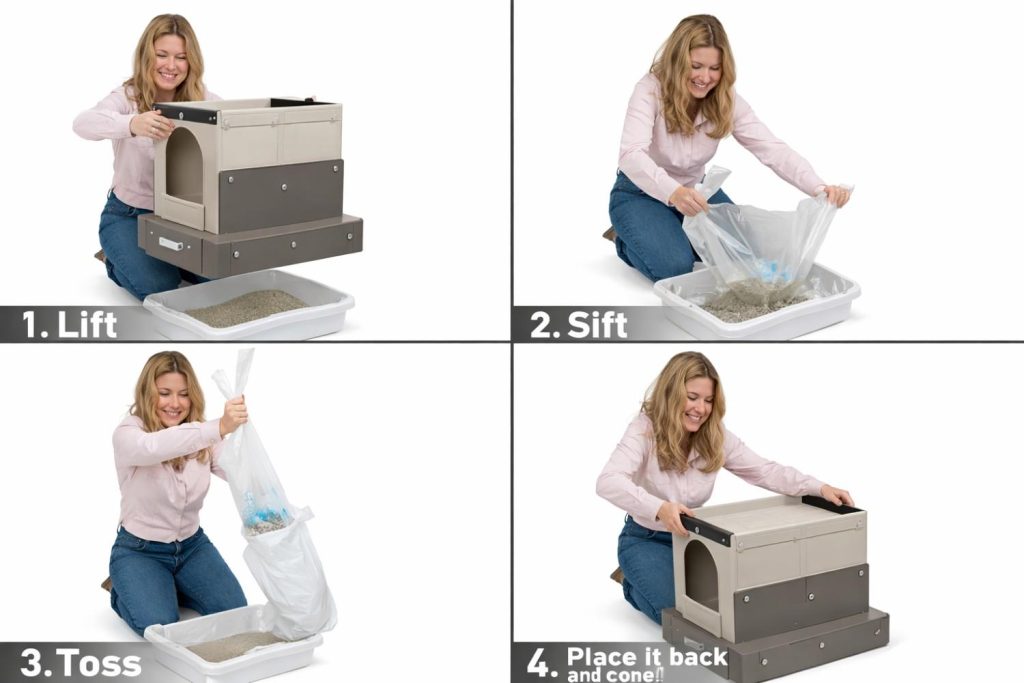
A sifting litter box uses two or three stackable trays. One tray has holes in the bottom. You lift the sifter tray and the clean litter falls through, leaving clumps behind. This design reduces the need for a traditional scoop.
Sifting boxes are a budget-friendly middle ground between basic open pans and self-cleaning models. They work best with clumping litter.
Best for: Budget-conscious owners who want a slightly easier cleaning routine.
6. Disposable Litter Box
Disposable litter boxes are made from recycled cardboard, paper pulp, or other biodegradable materials. They are designed for short-term use. You simply use them until they are soiled, then throw the entire box away.
These boxes are not a practical everyday solution, but they are convenient for travel, vet visits, or emergencies. Eco-friendly versions biodegrade quickly.
Best for: Travel, temporary setups, and owners who need a quick backup solution.
Cat Litter Box Comparison Table
Use this quick-reference table to compare the most common cat litter box types side by side.
| Box Type | Odor Control | Ease of Cleaning | Best For | Price Range (USD) |
| Open Litter Pan | Low | Very Easy | Kittens, seniors, multi-cat | $5 – $30 |
| Covered / Hooded | Moderate | Easy | Shy cats, small spaces | $15 – $60 |
| Top-Entry | Good | Moderate | Litter scatterers, dogs in home | $20 – $70 |
| Self-Cleaning | Excellent | Fully Auto | Busy owners, multi-cat | $80 – $700+ |
| Sifting | Moderate | Easy | Budget-conscious owners | $10 – $40 |
| Disposable | Low–Moderate | No scooping | Travel, temporary use | $5 – $20 (pack) |
How to Choose the Best Cat Litter Box: Buyer’s Guide
There is no single best cat litter box for every cat. The right choice comes down to five key factors. Work through each one before you decide.
1. Size: Bigger Is Almost Always Better
The correct size for a cat litter box is at least 1.5 times the length of your cat from nose to tail base. Most standard litter boxes are too small for adult cats. A cat that cannot turn around comfortably inside the box will stop using it.
For large breeds such as Maine Coons, Norwegian Forest Cats, or Ragdolls, you may need an extra-large storage bin repurposed as a litter box. These provide far more room than commercial boxes sold as ‘large’.
2. Entry Height: Think About Your Cat’s Age and Mobility
Young kittens and senior cats with arthritis need low-sided boxes they can step into without effort. A good entry height for a kitten or elderly cat is 3 to 4 inches (7.5 to 10 cm) maximum.
Young adult cats with no mobility issues can use boxes with higher sides, which do a better job of containing litter and preventing urine from reaching the floor when a cat squats at an angle.
3. Number of Cats: Follow the N+1 Rule
The widely accepted rule is one litter box per cat, plus one extra. If you have two cats, you need three boxes. If you have three cats, you need four.
This prevents territorial disputes over the box and ensures every cat has access even when another cat is using a different box. Place boxes in separate locations, never side by side in the same corner. Cats that dislike each other should not share the same approach path to a litter box.
4. Your Cat’s Personality
Shy or anxious cats often prefer covered boxes where they feel hidden from view. Confident, curious cats usually prefer open boxes where they can watch their surroundings. Cats that are heavy litter diggers and scatterers benefit from high-sided boxes or top-entry designs.
If you are unsure, start with an uncovered box. You can always add a cover later if odor becomes an issue. It is harder to transition a cat away from a covered box it has rejected.
5. Budget
You do not need to spend a lot to find an effective litter box. A plain open pan costing less than $20 works perfectly for most cats.
However, if you travel frequently, work long hours, or have multiple cats, investing in a self-cleaning model can save considerable time and reduce odor significantly.
Factor in the long-term cost. Most vets recommend replacing plastic litter boxes every six to twelve months because scratches trap bacteria and odors that cleaning cannot remove.
Choosing the Right Cat Litter
The box and the litter work together. Even the best litter box will be rejected if the litter inside is wrong for your cat.
Types of Cat Litter
• Clumping clay litter: The most popular type. Forms hard clumps when wet, making scooping easy. Fine-grained varieties are preferred by most cats.
• Non-clumping clay litter: Absorbs moisture but does not form clumps. Requires full replacement more frequently.
• Silica crystal litter: Highly absorbent and very low dust. Lasts longer per change. Some cats dislike the texture.
• Natural / biodegradable litter: Made from wood, corn, wheat, paper, or walnut shells. Good for eco-conscious owners. Clumping ability varies by type.
• Pellet litter: Compressed pellets of pine, paper, or other materials. Very low tracking. Not preferred by all cats.
How Much Litter to Use
Fill the box to a depth of 2 to 3 inches (5 to 7.5 cm). This gives your cat enough material to dig and cover waste. Deeper litter is not necessarily better — wild cats prefer shallow, loose soil. Too much litter can cause clumps to stick to the bottom of the box, making cleaning harder.
Where to Place a Cat Litter Box
Location is one of the most overlooked factors in litter box success. Cats will often reject a perfectly good box simply because of where it is placed.
Good Placement Rules
- Place the box in a quiet, low-traffic area where your cat can use it without being startled.
- Never place the litter box next to your cat’s food and water bowls. Cats are instinctively averse to eliminating near where they eat.
- In a multi-level home, place at least one litter box on every floor. Young kittens and senior cats may not reach another level in time.
- Avoid placing the box next to appliances such as washing machines or boilers. Sudden loud noises can startle a cat mid-use and create a lasting aversion.
- Do not hide the box in a tight, enclosed space with no escape route. Cats feel vulnerable while eliminating and need to be able to see exits.
Common Placement Mistakes
- Basement-only placement: Too far away for kittens, seniors, or newly adopted cats.
- Garage placement: Cold concrete floors and chemical smells are unappealing to cats.
- Cluttered laundry rooms: Noisy, busy, and often too small for the cat to feel comfortable.
- Side by side in one corner: Multiple boxes crammed together count as one box in a cat’s mind.
How to Clean a Cat Litter Box
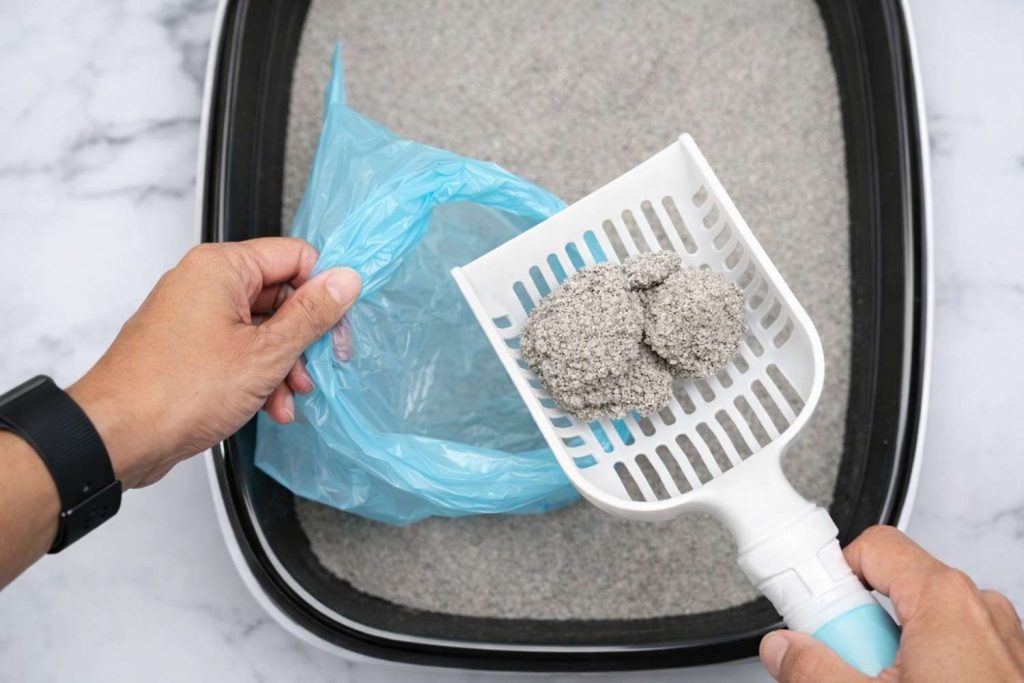
A clean litter box is the single most important factor in getting your cat to use it consistently. Most cats will refuse a dirty box before they will use it. Follow this routine for the best results.
Daily Routine
- Scoop all solid waste and urine clumps from the box at least once per day. Twice is better for multi-cat households.
- Dispose of clumps in a sealed bag.
- Top off the box with fresh litter to maintain a 2 to 3-inch depth.
Weekly Deep Clean
- Empty all litter from the box completely.
- Wash the box with warm water and a mild, unscented dish soap. Avoid bleach, ammonia, or heavily scented cleaners — they can leave odors that repel cats.
- Rinse the box thoroughly to remove all soap residue.
- Allow it to dry completely before adding fresh litter.
- Add a thin layer of baking soda on the bottom before pouring in fresh litter to help absorb odors naturally.
When to Replace the Box
Plastic litter boxes develop micro-scratches over time. These scratches hold bacteria and odors that soap and water cannot reach.
Replace your plastic litter box every 6 to 12 months, or sooner if you notice a persistent odor even after cleaning. Stainless steel and glazed ceramic boxes last much longer and are more hygienic.
How to Litter Train a Kitten or Adult Cat
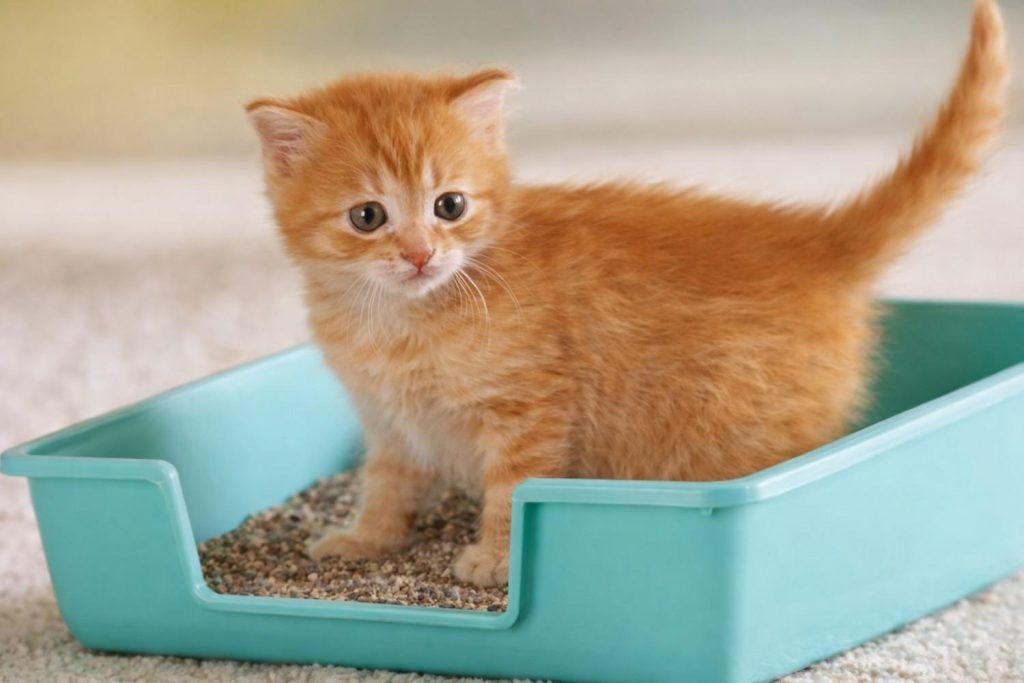
Most kittens learn to use a litter box quickly because the instinct to bury waste in loose material is hardwired into them. Your job is simply to provide an accessible, attractive box and let their instincts do the work.
Litter Training a Kitten
- Set up the litter box before bringing your kitten home. Place it in a quiet, low-traffic area that is easy to reach.
- Place the kitten in the box after meals, after naps, and after play sessions. These are the times kittens are most likely to need to eliminate.
- Let the kitten sniff and explore the box. Never force their paws into the litter or force them to dig. This creates a negative association.
- Praise your kitten calmly when they use the box. Never punish accidents. Punishment increases anxiety and makes litter box problems worse.
- Keep the box spotlessly clean. Kittens are especially sensitive to odors.
Litter Training an Adult or Rescue Cat
Adult cats adopted from shelters may already be litter trained. Give a newly adopted cat time to adjust before assuming there is a problem.
Confine the cat initially to a smaller room with a litter box, food, water, and a hiding spot. Expand their territory gradually as they gain confidence.
If an adult cat stops using its litter box suddenly, always rule out a medical cause first. Urinary tract infections, kidney disease, and other health issues can cause sudden litter box avoidance. A veterinary check-up is always the right first step.
Also check : Cat grooming
Common Cat Litter Box Problems and How to Fix Them
My Cat Is Not Using the Litter Box
This is the most common litter box complaint. Work through this checklist before assuming a behavioral problem:
- Is the box clean? Scoop at least once daily. Cats will choose the floor over a dirty box.
- Is the box big enough? If the box is too small, the cat cannot posture correctly.
- Is the litter type the same as before? Cats hate sudden changes. Switch litter gradually if needed.
- Is the location too loud, cold, or difficult to reach?
- Is there a new pet, new person, or other change at home causing stress?
- Has the cat been to the vet recently? Rule out health issues first.
My Cat Is Spraying Outside the Box
Spraying is a marking behavior, different from regular urination. It often has a hormonal cause. If your cat is not spayed or neutered, this is usually the primary solution.
In neutered or spayed cats, spraying is most often triggered by stress, territorial insecurity, or a medical issue. Consult your vet.
The Litter Box Smells Bad Even After Cleaning
Persistent odor usually means the box itself has absorbed odors into scratched plastic. Replace the box. If the smell persists, switch to a non-clumping litter or try a cat litter deodorizer with baking soda as the active ingredient.
Avoid strongly scented deodorizers that may deter your cat.
My Cat Scratches the Floor Around the Box
This is normal behavior. Cats instinctively try to cover their waste. If your cat is scratching the floor outside the box, it may mean the box is too small, too full, or the cat dislikes the litter texture. Try a larger box and a finer litter.
Frequently Asked Questions
Conclusion
Choosing the right cat litter box is not complicated once you know what your cat needs. Start with the correct size — at least 1.5 times the length of your cat. Choose a style that matches your cat’s personality and your lifestyle. Place the box in a quiet, accessible location away from food and water. Scoop it every day. Deep-clean it every week. Replace it every 6 to 12 months.
Follow these steps and litter box problems will rarely trouble you. Your cat will be cleaner, calmer, and healthier — and your home will be fresher as a result.If problems do arise, always check for medical causes first. Most litter box issues have simple, practical solutions once you understand the way cats think.