If your cat ignores its water bowl most of the day, you are not alone. Cats are naturally drawn to moving water, not standing bowls.
A stainless steel cat water fountain solves this problem by providing a continuous flow of fresh, filtered water that your cat will actually want to drink. In this guide, we explore the best stainless steel cat water fountain benefits, what makes them superior to plastic and ceramic options, and exactly what to look for before you buy.
Why Cats Need a Water Fountain
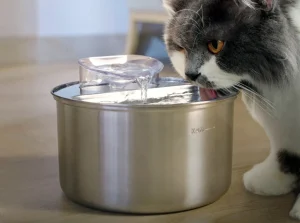
Cats come from desert animals, so they are not used to drinking a lot of water. In the wild, they got most of their water from food, not from still water. Because of this, many cats today do not feel very thirsty. They also do not trust still water, as it can seem dirty, while moving water feels fresh and safe to them.
When cats do not drink enough, they can get serious health problems like kidney disease, urinary infections, and bladder stones. A stainless steel cat water fountain helps solve this by keeping water moving, clean, and fresh. It encourages cats to drink more, which helps them stay healthy and reduces the chances of illness.
Top Benefits of a Stainless Steel Cat Water Fountain
Not all cat fountains are equal. Stainless steel stands apart from plastic and ceramic for a range of practical, health-related, and long-term value reasons. Here are the most important benefits you should know.
Encourages More Drinking
Flowing water triggers a cat’s natural instinct to drink. Studies show that cats drinking from a moving source consume significantly more water daily than those given a static bowl.
Bacteria-Resistant Surface
Food-grade 304 stainless steel is non-porous. Bacteria, mold, and biofilm cannot penetrate the surface, unlike plastic which develops microscopic scratches that harbor germs over time.
BPA-Free and Non-Toxic
Stainless steel contains no bisphenol-A (BPA) or other chemical leachates. Your cat’s water stays pure regardless of temperature or how long water sits in the reservoir.
Supports Kidney and Urinary Health
Proper hydration flushes toxins from the kidneys and dilutes urine. This directly reduces the risk of chronic kidney disease, urinary tract infections, and bladder crystal formation.
Multi-Stage Filtration
Most stainless steel fountains include activated carbon filters, foam pre-filters, and ion-exchange resin layers. These remove fur, debris, heavy metals, chlorine, and odors from tap water.
Exceptional Durability
Stainless steel resists rust, corrosion, denting, and general wear. A high-quality stainless fountain can last many years without degrading, unlike plastic models that warp and discolor.
Dishwasher Safe
Most stainless steel components are safe for the top rack of a dishwasher. Cleaning is fast, thorough, and requires no scrubbing of stubborn biofilm deposits.
Whisker-Friendly Design
Many stainless steel fountains feature wide, shallow bowls that prevent whisker fatigue — a real sensitivity issue for cats forced to drink from narrow or deep containers.
How a Stainless Steel Fountain Improves Your Cat’s Health

Preventing Chronic Kidney Disease
Chronic kidney disease (CKD) affects a large percentage of cats, especially older animals. One of the most effective preventative measures is consistent, high water intake.
When a cat drinks more water, the kidneys are flushed regularly, reducing the buildup of waste products in the bloodstream. A circulating fountain keeps water oxygenated and cool, which cats find more appealing than room-temperature bowl water that has been sitting for hours.
Reducing Urinary Tract Infections
Urinary tract infections (UTIs) in cats are often the result of concentrated urine. When cats do not drink enough water, urine becomes more concentrated, creating an environment where bacteria thrive.
Increased water consumption dilutes the urine and flushes the bladder more frequently. Several veterinary studies indicate that access to a moving water source can reduce UTI incidence significantly.
Flowing water encourages cats to drink more, directly supporting kidney and urinary tract health.
Preventing Feline Acne and Chin Infections
Plastic water bowls are a well-documented cause of feline chin acne. The microscopic scratches that form in plastic over time allow bacteria to multiply.
When a cat presses its chin against the bowl to drink, those bacteria transfer to the skin and cause infection. Stainless steel does not develop these scratches. Its smooth, non-porous surface stays clean and does not transfer bacteria to your cat’s skin.
Supporting Overall Wellbeing
Adequate hydration affects far more than the kidneys. Water supports joint lubrication, digestion, temperature regulation, and the transport of nutrients throughout the body.
Cats that drink enough water are generally more active, maintain healthier coats, and show better cognitive alertness than chronically dehydrated animals.
Stainless Steel vs Plastic vs Ceramic
Choosing the right material for your cat’s fountain matters. Here is how stainless steel compares to the two main alternatives on every key factor.
| Feature | Stainless Steel | Plastic | Ceramic |
| Bacteria Resistance | Excellent – non-porous | Poor – scratches harbor germs | Good – glazed surface |
| BPA-Free | Yes | Varies – often contains BPA | Yes |
| Durability | Very high – rust-resistant | Moderate – warps & discolors | Moderate – chips if dropped |
| Dishwasher Safe | Yes | Sometimes – top rack only | Often – but handwash safer |
| Odor Absorption | None – non-porous | Yes – absorbs odors over time | Minimal |
| Safe for Feline Acne | Yes – no bacteria transfer | No – major cause of acne | Yes |
| Long-Term Cost | Low – lasts years | High – needs frequent replacement | Medium – can break |
| Noise Level | Very quiet with good pump | Quiet | Quiet |
Plastic is the cheapest option but carries the most health risks due to bacteria buildup, chemical leaching, and the development of feline acne. Ceramic is a good middle-ground option but is heavier and more fragile. Stainless steel offers the best combination of hygiene, durability, and long-term value.
What to Look for When Buying a Stainless Steel Cat Fountain
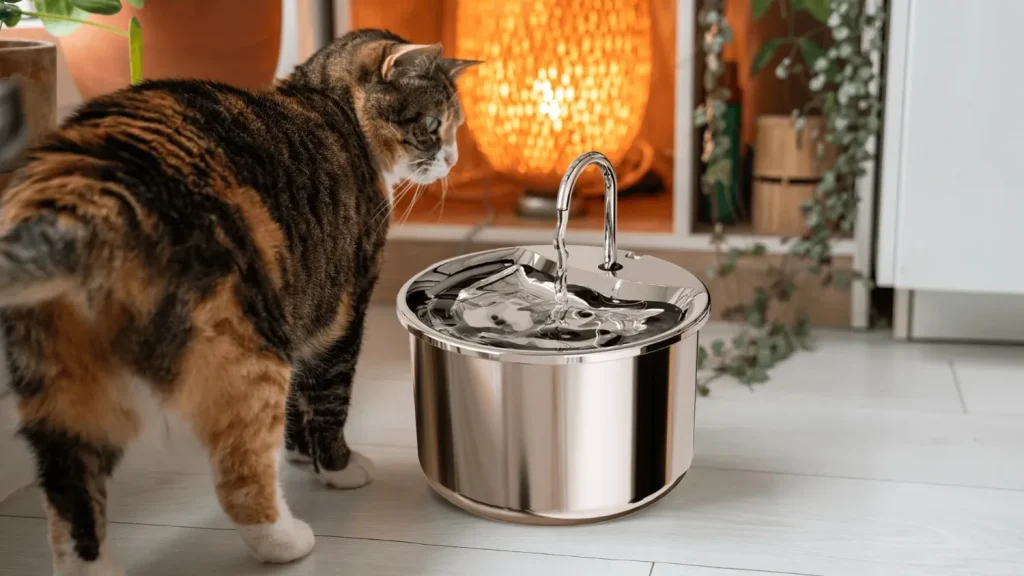
Look for food-grade 304 stainless steel construction, multi-stage filtration, and a quiet low-energy pump.
Food-Grade 304 Stainless Steel
Always confirm the fountain is made from food-grade 304 stainless steel. This grade is certified for contact with food and water.
It resists rust, corrosion, and chemical reactions even with long-term water exposure. Lower grades of stainless steel can corrode over time and contaminate the water.
Multi-Stage Filtration System
Look for a fountain with at least two filter layers. A foam pre-filter catches fur, food particles, and visible debris.
An activated carbon layer removes chlorine, odors, and unpleasant tastes. An ion-exchange resin layer softens hard water by reducing calcium and magnesium. This combination produces water that is noticeably cleaner and better-tasting.
Water Capacity
For a single cat household, a 1.5 to 2 litre capacity is generally sufficient. For homes with two or more cats, choose a fountain with at least 3 litres. A larger reservoir means less frequent refilling and a more consistent water level for continuous pump operation.
Pump Noise Level
A loud pump can deter sensitive cats from using the fountain entirely. Look for pumps rated at 30 dB or below. Many premium stainless steel fountains operate at under 25 dB, which is quieter than a whisper and will not disturb your cat or your household.
Ease of Cleaning
Choose a fountain with removable, dishwasher-safe stainless steel parts. Avoid designs with many small crevices or complex internal structures that trap biofilm. The fewer the hard-to-reach areas, the easier and more thorough your cleaning will be.
Pro Tip: Replace your fountain filter every 2 to 4 weeks, depending on your water hardness and the number of cats using it. A clogged or expired filter stops removing impurities and can actually introduce odors into the water. Set a monthly reminder to check and replace it.
How to Clean and Maintain Your Stainless Steel Cat Fountain
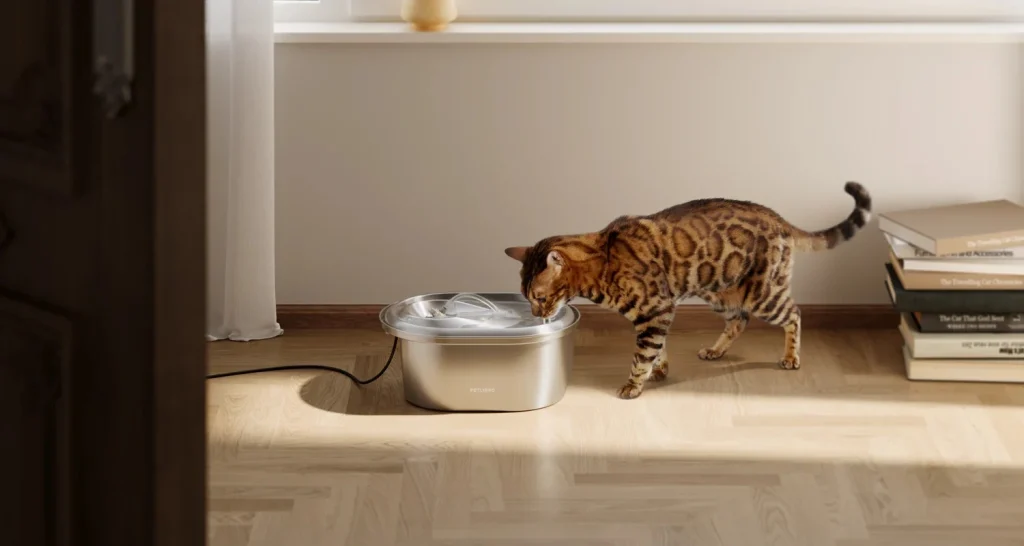
A stainless steel fountain is only as effective as its maintenance routine. Even non-porous surfaces can develop biofilm if they are not cleaned regularly. Follow this schedule to keep your fountain hygienic and your cat healthy.
Weekly Cleaning Routine
- Disassemble the fountain completely, separating the bowl, reservoir, pump, and filter.
- Wash all stainless steel parts in warm soapy water or place them in the top rack of your dishwasher.
- Use a small cleaning brush (usually included with the fountain) to clear the pump intake and nozzle of any debris.
- Rinse all components thoroughly to remove any soap residue before reassembly.
- Inspect the filter and replace it if it appears discolored, clogged, or older than 2 to 4 weeks.
Monthly Deep Clean
- Soak the pump in white vinegar diluted with water (1:1 ratio) for 30 minutes to dissolve mineral deposits.
- Use a bottle brush to scrub the inside of the reservoir and any tubing.
- Rinse everything twice with clean water to ensure no vinegar residue remains.
Helping Your Cat Adjust
Some cats are initially hesitant around a new fountain. Place the fountain in a quiet area away from food and the litter box. Run the pump in your cat’s presence so they become familiar with the sound.
You can add a small amount of water from their old bowl to make the fountain smell familiar. Most cats adapt within a few days.
Frequently Asked Questions
Final Thoughts
The best stainless steel cat water fountain benefits go far beyond convenience. They represent a meaningful investment in your cat’s long-term health.
By encouraging greater water intake, eliminating bacterial contamination, removing chemical leachates, and providing a filtration system that produces genuinely clean water, a stainless steel fountain addresses the root causes of the most common health problems in domestic cats.
If your cat is a reluctant drinker, suffers from recurring urinary issues, or you simply want to provide the cleanest possible water source, a high-quality stainless steel cat water fountain is the right choice. Browse our full range of stainless steel cat fountains to find the perfect match for your home and your cat’s needs.