Choosing the right litter box is one of the most important decisions you will make as a cat owner. It affects your cat’s comfort, behavior, and long-term health. A poorly chosen litter box can cause house soiling, stress, and even urinary problems.
Yet many cat owners pick the first box they see on a store shelf without thinking about their cat’s actual needs.This guide covers every factor that matters when selecting a litter box for an indoor cat. Whether you have a kitten, a senior cat, or a multi-cat household, you will find clear answers and practical advice here.
Why the Right Litter Box Matters for Indoor Cats
Indoor cats cannot go outside to find a suitable elimination spot. Everything depends on the box you provide. Cats have strong instincts about where they go to the bathroom. In the wild, they choose open spaces where they can see in multiple directions, feel safe, and dig into soft ground. A litter box that does not match these instincts will be avoided.
When a cat avoids the litter box, it does not mean the cat is misbehaving. It usually means something about the box is wrong. Common causes include an incorrect size, a lid that traps odors, or a location that feels unsafe.
Getting the litter box right from the beginning saves you frustration and keeps your cat healthy and calm.
Types of Litter Boxes Compared
There are four main types of litter boxes. Each has specific advantages and drawbacks depending on your cat and living situation. The table below gives you a clear side-by-side comparison.
| Box Type | Best For | Pros | Cons | Vet Rating |
| Open / Uncovered | Most adult cats | Good airflow, open sightlines, easy to clean | Less odor containment for humans, litter scatter | Recommended |
| Covered / Hooded | Humans in small apartments | Hides mess, some odor containment | Traps odors for cats, blocks sightlines, causes stress | Use with Caution |
| Top-Entry | Healthy adult cats, reduces scatter | Excellent litter scatter control | Difficult for seniors, kittens, and cats with mobility issues | Selective Use |
| Self-Cleaning | Busy owners | Automated scooping, less daily effort | Noisy, often too small, startles cats, expensive | Use with Caution |
Why Open Litter Boxes Are Usually the Best Choice
An open litter box gives your cat a clear view of the room while using the box. This is important because cats feel vulnerable when eliminating.
If a cat cannot see what is happening around it, it will feel anxious. Open boxes also allow odors to escape, which is much more comfortable for the cat even if it is less convenient for humans.
The Problem With Covered and Hooded Boxes
Hooded boxes trap ammonia and other odors inside. To a cat’s highly sensitive nose, this is like being forced to sit inside a dirty outhouse.
Many cats will avoid a hooded box after a few uses. Covered boxes also block sightlines, which increases the cat’s feeling of vulnerability and stress.
Self-Cleaning Boxes: Convenient but Not Ideal
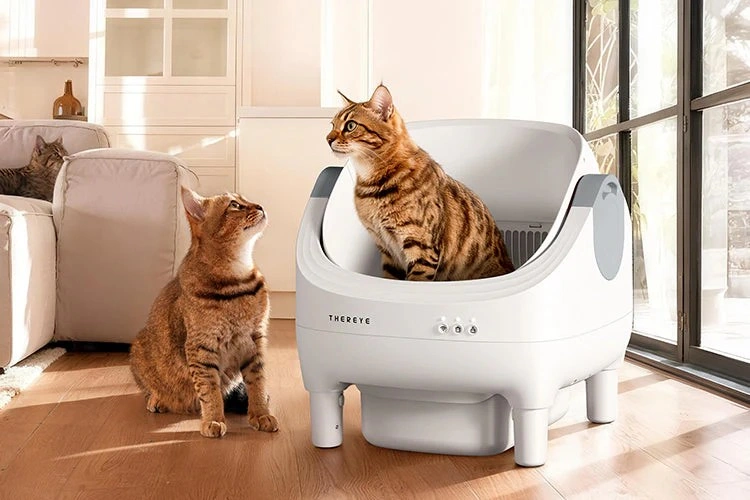
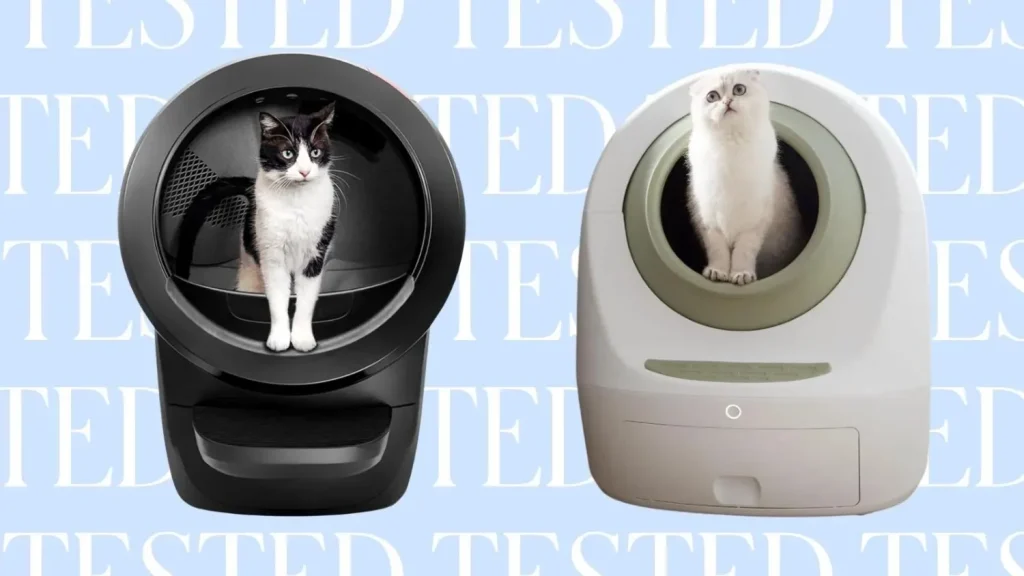
Automated litter boxes can rake or rotate waste away automatically. While this saves time, these boxes have real drawbacks. Most models are smaller than the minimum recommended size.
The mechanical noise and movement can startle cats and cause them to associate the box with a frightening experience. Many cats will stop using a self-cleaning box for this reason alone.
Litter Box Size Guide: How Big Should It Be?
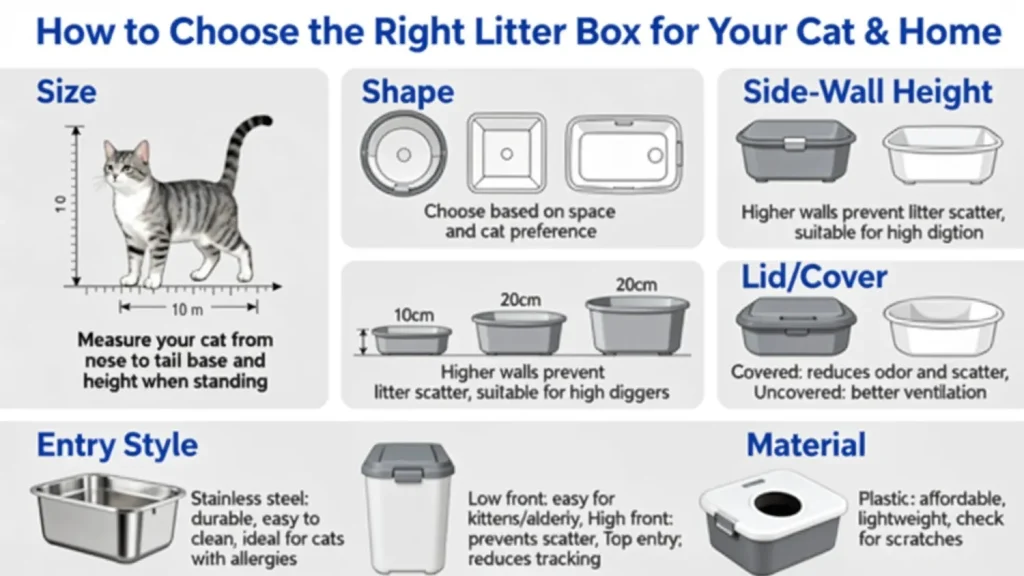
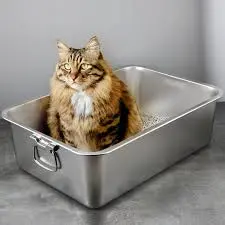
Size is the single most important factor when choosing a litter box. Most boxes sold in stores are too small for an average adult cat. This leads to litter being pushed out, cats hanging partially over the edge, and reduced willingness to use the box.
The 1.5x Rule
A reliable standard is that a litter box should be at least 1.5 times the length of your cat from nose to the base of the tail. For a typical adult cat measuring 15 to 18 inches in body length, this means the box should be at least 22 to 27 inches long.
If you cannot find a commercial box that meets these dimensions, a large plastic storage container with a low entrance cut into one side works very well and costs less than most litter boxes sold in pet stores.
Entry Height: A Detail That Makes a Big Difference
The entry point of a litter box is often overlooked. A high entrance can prevent a cat from getting in and out comfortably. This is especially true for kittens and older cats with joint problems.
For most healthy adult cats, an entry height of 4 to 6 inches is fine. For kittens under 6 months old and senior cats with arthritis or mobility issues, the entry should be no higher than 2 inches from the ground.
High-sided boxes can still be used, but only if a low cut-out entry is included on one side. Many owners make this modification themselves using a utility knife on a plastic storage bin, which is both affordable and practical.
Litter Box Tips for Kittens, Senior Cats, and Multi-Cat Homes
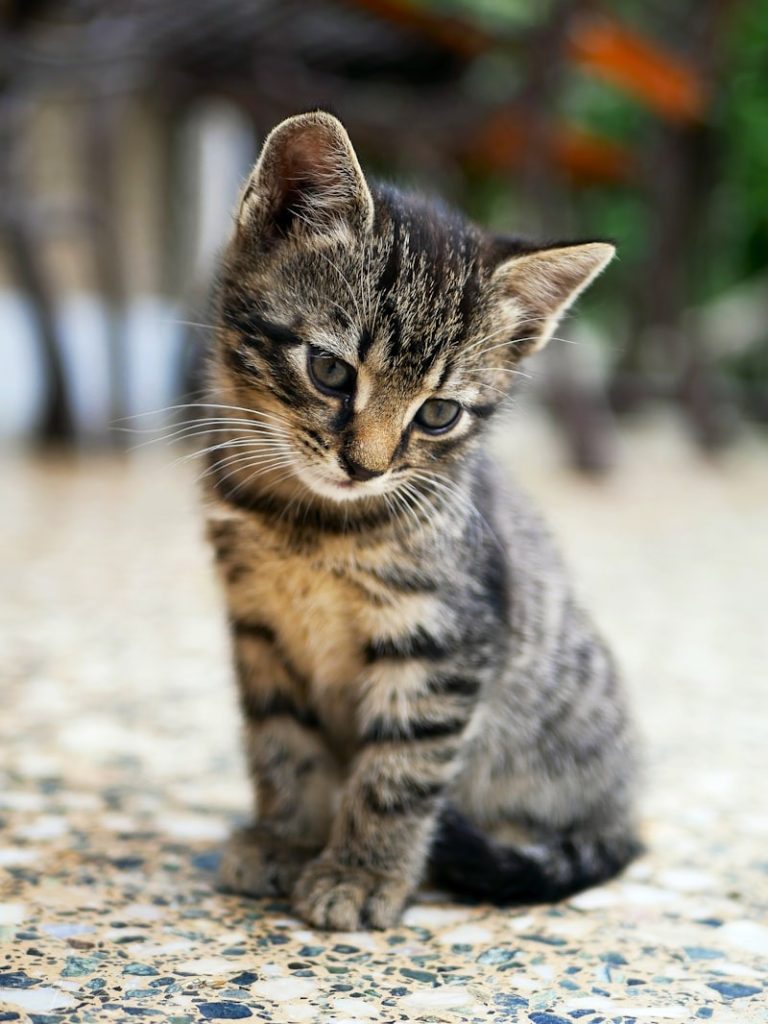
Senior cats benefit greatly from low-entry litter boxes that reduce the effort needed to step inside.
Kittens
Young kittens need a very low-entry box. A kitten that cannot easily climb into the box will eliminate on the floor nearby. A shallow baking tray or a box with a very low entry works well during the first few months. As the kitten grows, transition to a full-size box to match its larger body.
Senior Cats
Cats over 10 years old frequently develop osteoarthritis, a joint condition that makes high steps painful. A low-entry box with sides no taller than 2 inches at the entrance will encourage continued use and prevent painful trips in and out.
Watch your senior cat closely for changes in litter box habits, as these often signal an underlying health problem rather than a preference issue.
Multi-Cat Households
The standard rule for multi-cat homes is to have one more litter box than the number of cats. Two cats means at least three boxes. Three cats means at least four.
Dominant cats will sometimes guard a single litter box, preventing other cats from using it. Multiple boxes placed in separate locations prevent this type of conflict.
Multi-Cat Tip
Never line multiple litter boxes up side by side in the same spot. Cats will treat them as a single large box. Spread boxes across different rooms or different floors of your home.
Multi-cat homes require multiple litter boxes placed in separate locations to prevent territorial stress.
Litter Box Placement: Location Matters More Than You Think
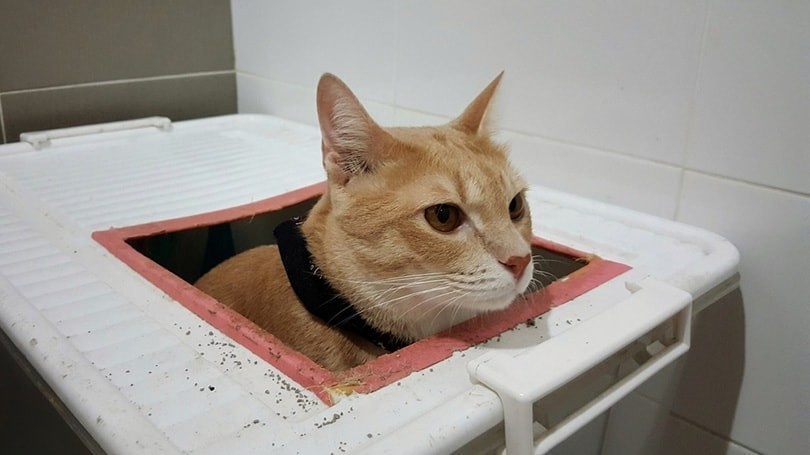
Even a perfectly sized litter box will be avoided if it is placed in the wrong spot. Cats need to feel safe when using the litter box. A location that is too noisy, too confined, or too close to food and water will deter use.
Ideal Placement Rules
- Place the box in a quiet, low-traffic area where the cat is not frequently startled.
- Avoid placing it near loud appliances such as washing machines or dryers.
- Do not put the litter box next to the cat’s food or water bowls. Cats do not eliminate near their food source in nature.
- Choose a location with at least one clear exit route so the cat does not feel trapped.
- Avoid placing the box in a fully enclosed closet where odors build up and the cat feels cornered.
In multi-story homes, place at least one litter box on each floor. A senior cat that cannot easily climb stairs should always have a box on the same floor where it spends most of its time.
Choosing the Right Litter to Go with the Right Box
The box and the litter work together. Even the best litter box will fail if the litter inside is uncomfortable or off-putting to your cat.
What Most Cats Prefer
Research and behavioral observation consistently show that most cats prefer an unscented, fine-grained clumping litter. Fine particles feel closer to natural soil and sand, which cats instinctively prefer for digging and burying.
Scented litters are made to appeal to humans, not cats. The strong fragrances often irritate a cat’s sensitive nasal passages and encourage avoidance.
Litter Depth
Cats need enough depth to dig and bury their waste. A litter depth of 3 to 5 inches is recommended. Going lower means the cat hits the plastic bottom of the box while digging, which many cats find unpleasant.
Avoid These Litter Types
Heavily scented litters, crystal litters with very coarse grains, and sawdust-based litters are commonly rejected by cats. If you are switching litters, transition slowly by mixing the new type with the old over 1 to 2 weeks.
Litter Box Cleaning and Hygiene
Cats are clean animals by nature. A dirty litter box is one of the most common reasons a cat will begin eliminating outside the box. Keeping the box clean is not just about odor control for humans; it is essential for the cat’s willingness to use it.
Recommended Cleaning Schedule
- Daily: Scoop solid waste and clumps at least once per day, ideally twice.
- Weekly: Empty all litter, wash the box with unscented soap and warm water, and refill with fresh litter.
- Monthly: Inspect the box for deep scratches in the plastic. Scratches harbor bacteria and odor that cannot be washed away.
- Every 12 months: Replace the entire litter box. Worn plastic retains odors permanently, regardless of how often you clean it.
Cleaning Tip
Never use bleach or heavily scented cleaning products inside the litter box. Even small residue amounts can be off-putting to a cat and lead to avoidance. Plain dish soap and hot water are sufficient.
Also check : Cat grooming
Common Litter Box Mistakes Cat Owners Make
- Buying a box that is too small. Most standard pet store boxes are too short for an adult cat. Always measure and compare before buying.
- Using a hooded box thinking it helps the cat. Lids contain odors inside the box, which is unpleasant for the cat and can cause avoidance.
- Placing all boxes in one location. Multiple boxes in one spot count as one location to a cat. Spread them around the home.
- Not scooping frequently enough. A box with soiled litter is a box many cats will walk away from.
- Using strongly scented litters. These are designed for human preferences, not cat comfort.
- Keeping the same box for too long. Old plastic holds bacteria and odor. Replace the box once a year.
- Ignoring the needs of aging cats. A box that worked perfectly at age three may be unsuitable for the same cat at age ten due to joint changes.
Key Takeaways Choosing the Right Litter Box for Indoor Cats
- Choose an open, uncovered box whenever possible. Lids trap odors and cause feline stress.
- Size is critical. The box must be at least 1.5 times your cat’s length from nose to tail base.
- Provide one more litter box than the number of cats you have, placed in separate locations.
- Use a low-entry box for kittens and senior cats to prevent discomfort and avoidance.
- Place boxes in quiet, accessible spots away from food, water, and loud appliances.
- Use unscented, fine-grain clumping litter at a depth of 3 to 5 inches.
- Scoop daily, deep-clean weekly, and replace the entire box every 12 months.
- Avoid self-cleaning boxes unless your cat shows clear comfort with noise and motion.