A stainless steel litter box for cats is the most hygienic, durable, and odor-resistant option on the market. Unlike plastic, it never absorbs smells or bacteria — and with proper care, it lasts a lifetime. This guide covers everything you need to know before buying one, from size and style to cleaning and top-rated picks.
1. What Is a Stainless Steel Litter Box?

A stainless steel litter box is a cat toilet pan made from food-grade or medical-grade stainless steel instead of the traditional plastic. These boxes feature a non-porous, smooth metal surface that doesn’t scratch, crack, absorb odors, or harbor bacteria over time.
What many people don’t realize is how many style variations exist. Whether you’re looking for a fully stainless steel litter box with a lid for maximum odor containment or a simple open pan for easy scooping, there’s an option for every cat and every home.
It’s also worth noting that the stainless steel kitty litter box isn’t just for cats — a stainless steel rabbit litter box follows the same hygienic principles and is increasingly popular among small pet owners for the same reasons.
Here’s a quick overview of all the main styles available:
| Style | Best For | Key Feature |
|---|---|---|
| Open flat pan | Most cats; easy scooping | Simple, low-cost entry point |
| stainless steel litter box with high sides | Sprayers and heavy diggers | 8–12″ walls contain mess |
| stainless steel litter box with cover | Privacy-loving cats; odor control | Hooded top traps odors inside |
| Stainless steel litter box with lid | Apartments; shared living spaces | Full enclosure; swing-door entry |
| Stainless steel litter box with sifter | Owners who dislike scooping | Sifting tray separates clumps automatically |
| XL stainless steel litter box | Large breeds; single-cat homes | 23″+ length for comfortable movement |
| extra large stainless steel litter box | Multi-cat homes; giant breeds | 25″+ length; maximum capacity |
| Round stainless steel litter box | Corner placement; small spaces | Space-saving circular design |
| Stainless steel self-cleaning litter box | Busy households | Motorized rake or rotating mechanism |
Stainless steel litter boxes were initially popular in veterinary clinics and animal shelters, where hygiene is non-negotiable. Now they’ve found a permanent place in homes around the world.
2. Why a Stainless Steel Litter Box Is Worth It

Plastic litter boxes have been the default for decades, but they come with a built-in problem that gets worse over time: plastic is porous.
Every time your cat scratches the inside of a plastic box, tiny grooves form. Urine and bacteria seep into those grooves, creating permanent odor and a breeding ground for pathogens — no matter how hard you scrub. Most vets recommend replacing a plastic litter box every 12–18 months for this exact reason.
A stainless steel cat litter box has none of these problems. Its non-porous surface means waste never penetrates the material. You’re always cleaning the surface, not fighting what’s been absorbed into it. That’s the core reason why so many cat owners — once they make the switch to a stainless steel litterbox — never go back to plastic.
Beyond hygiene, many owners also report that their cats start avoiding old plastic boxes — not because of laziness, but because the embedded odors make the box feel “already used” to a cat’s sensitive nose. Switching often resolves litter box avoidance issues entirely.
3. Stainless Steel vs. Plastic Litter Box: Side-by-Side Comparison
| Feature | Stainless Steel | Plastic |
|---|---|---|
| Odor absorption | None — non-porous surface | High — absorbs over time |
| Bacteria buildup | Minimal | Significant with use |
| Ease of cleaning | Very easy — waste slides off | Gets harder as surface scratches |
| Durability | Lasts 10+ years | Needs replacement every 1–2 years |
| Scratch resistance | Excellent | Low — cats scratch through the surface |
| Weight | Heavier | Lightweight |
| Eco-friendliness | 100% recyclable | Non-recyclable plastic waste |
| Upfront cost | Higher ($50–$120) | Lower ($10–$40) |
| Long-term cost | Lower (buy once) | Higher (frequent replacement) |
| Noise level | Slightly louder when cat digs | Quieter |
| Cat acceptance | Most cats adapt quickly | Generally accepted |
Bottom line: Plastic costs less upfront but far more over time — financially and hygienically. Stainless steel is the smarter long-term investment.
4. Key Benefits of a Stainless Steel Cat Litter Box
Superior Odor Control
The number one reason people make the switch. A fully stainless steel litter box doesn’t absorb ammonia or bacterial waste, which means your home stays fresher longer. This is especially noticeable in smaller apartments or homes where litter boxes are in shared spaces.
Exceptional Hygiene
Because the surface is non-porous, bacteria can’t penetrate the material. A quick rinse with soap and water leaves the box genuinely clean — not just surface-clean. This is important for your cat’s health, especially in multi-cat households where disease transmission through litter boxes is a real concern.
Long-Term Durability
A quality stainless steel litter box can last the entirety of your cat’s life. It won’t crack, warp, discolor, or degrade. Even with daily use by multiple cats, the structure remains intact for 10+ years.
Easy to Clean
Litter and waste slide off the smooth metal surface rather than sticking. This cuts your cleaning time dramatically. Shelters that have switched from plastic to stainless steel consistently report that boxes take half as long to clean.
Eco-Friendly
Stainless steel is 100% recyclable. Instead of replacing a plastic litter box every year (sending more plastic to landfill), you buy once and keep it for years.
Sleek, Modern Aesthetic
Plastic litter boxes are an eyesore. Stainless steel has a clean, professional look that blends much better with modern home décor — especially the covered and lidded styles, which double as discreet furniture pieces.
Safe for Cats with Allergies or Sensitivities
Some cats develop sensitivities to the chemicals in plastic, including BPA and phthalates. A stainless steel cat litter box is inert — it doesn’t leach any chemicals into litter or onto your cat’s paws.
5. Potential Drawbacks

Being honest here matters. Stainless steel litter boxes aren’t perfect for everyone.
Higher Upfront Cost
The reality: A quality stainless steel box runs $50–$120+, versus $10–$30 for plastic. However, when you factor in that you’ll replace a plastic box every 1–2 years, stainless steel pays for itself within 3–4 years and continues saving you money after that.
Heavier Weight
The reality: Stainless steel is significantly heavier than plastic, especially once filled with litter. If you need to move the box frequently (between floors, for cleaning), this can be inconvenient. Look for models with built-in handles to make transport easier.
Noise When Cats Dig
The reality: The metal surface amplifies the sound of your cat scratching and digging. This is noticeable in quiet rooms or at night. Placing a thin, washable liner at the bottom can dampen the sound without sacrificing the hygiene benefits.
Some Cats Need an Adjustment Period
The reality: A small percentage of cats are hesitant about the new surface temperature (metal is cooler than plastic). Most cats adjust within days when introduced gradually. See our setup guide below for tips.
Potential for Minor Discoloration
The reality: Over time, some stainless steel boxes develop slight surface discoloration — this is normal and not mold or rust. It doesn’t affect hygiene or performance.
Use this checklist before Buying:
6. How to Choose the Right Stainless Steel Litter Box
Size — The Most Important Factor
The golden rule: your litter box should be at least 1.5x the length of your cat from nose to tail. Most commercially available boxes are too small. For the average adult cat, look for dimensions of at least 18″ long × 14″ wide. For large breeds like Maine Coons or Ragdolls, go for an XL stainless steel litter box with 23″+ in length. For giant breeds or households with two or more cats, an XXL or extra large stainless steel litter box — typically 25″+ — is the right call.
Don’t compromise on size. A cramped litter box is one of the top reasons cats eliminate outside the box.
Wall Height
- Low sides (4–6″): Fine for kittens and cats with mobility issues
- Stainless steel high sided litter box (8–12″): Best for cats that spray urine on the walls or kick litter excessively; a stainless steel litter box with high sides keeps messes fully contained without needing a full enclosure
- Scatter shield: A removable panel that raises three sides while keeping the front open — the best of both worlds
Entry Style
- Front entry: Standard; works for most cats
- Top entry: Excellent for preventing litter tracking; not suitable for senior cats or cats with arthritis
- Side entry: Good for high-spraying cats; pairs naturally with a stainless steel litter box covered design
Ease of Cleaning
Look for a smooth, seamless interior with no sharp corners or deep crevices. If you dislike daily scooping, a stainless steel litter box with sifter tray is worth the upgrade — the sifting layer separates clumps automatically so you simply lift and shake. Removable trays are a bonus. Avoid models with complex mechanisms that are difficult to disassemble.
Weight and Portability
Check the empty weight before buying. If you plan to move the box regularly, anything over 4–5 lbs empty will become cumbersome once filled. Look for integrated handles.
Number of Cats in Your Household
The rule: one litter box per cat, plus one extra. In a multi-cat home, opt for XL or XXL options and consider open designs so no cat can be “cornered” or ambushed while using the box.
Budget
| Budget | What to Expect |
|---|---|
| $50–$75 | Basic stainless steel pan; solid quality; may lack extras |
| $75–$100 | Better sizing options, scatter shield or cover included |
| $100–$150 | Premium build; stainless steel cat litter box with lid options available |
| $150+ | Modular designs; enclosed/closed styles; XL and XXL capacity |
7. Best Stainless Steel Litter Boxes of 2026
Based on extensive stainless steel litter box reviews across thousands of verified buyers, here are the top-performing options by category.
Best Overall: iPrimio Stainless Steel Cat Litter Box with Enclosure

Size: 23.5″ L × 15.5″ W × 6″ H (12″ H with enclosure) Price: ~$80 Rating: 4.6/5 (9,500+ reviews)
The iPrimio is the most tested and consistently praised stainless steel litter box for cats on the market. The removable enclosure acts as a stainless steel litter box with cover — it adds 6″ to three sides, making it ideal for cats that spray or kick litter excessively. The front stays open for easy access. The smooth, non-stick surface keeps waste from clinging and odors minimal.
Best for: Most households; single and multi-cat homes; sprayer cats
Pros: Large dimensions; enclosure is easy to attach/remove; non-stick surface; available with or without enclosure
Cons: No handles; enclosure doesn’t snap firmly on all units
Best Covered Option: Stainless Steel Cat Litter Box with Lid
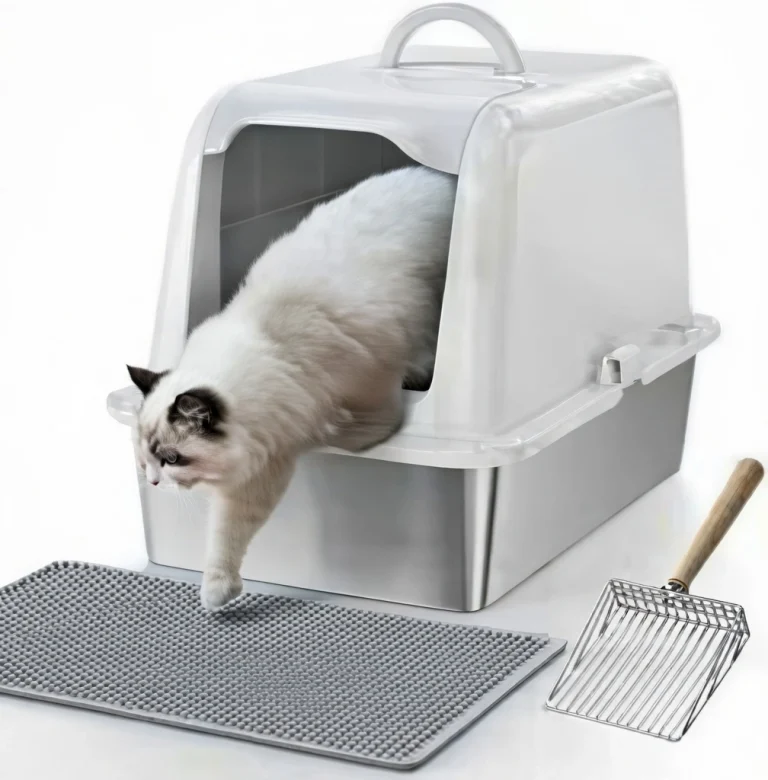
Price: ~$120–$150
For cat owners who want full odor containment, a stainless steel closed litter box with a swing-door lid is the answer. This style — also called a stainless steel cat litter box with cover — combines the material’s hygienic superiority with the privacy and odor-trapping benefits of a fully hooded design. Look for models with a ventilation filter and easy-release lid latch.
Best for: Apartment dwellers; privacy-loving cats; strong odor situations; homes where the litter box is in a visible area
Best for Large Cats: XL Stainless Steel Litter Box
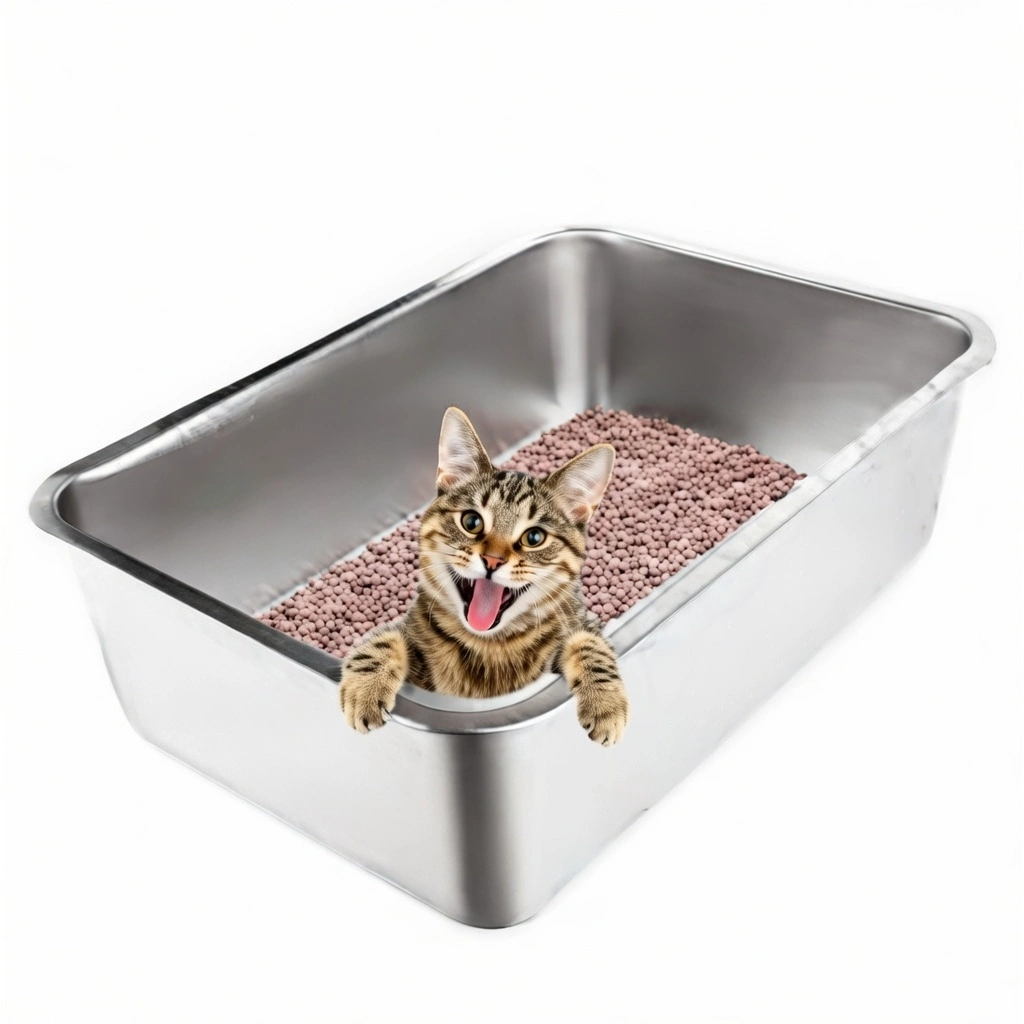
Size: 24″ L × 17″ W × 7″ H Price: ~$65–$80
The generous XL dimensions make this the best stainless steel cat litter box for larger breeds. An open-top design allows maximum airflow, reducing moisture buildup. The deep pan keeps litter contained even for enthusiastic diggers. For Maine Coons and similarly large cats, this is the minimum size to consider.
Best for: Maine Coons, Ragdolls, Bengals, and other large-breed cats
Best for Multiple Cats: XXL Extra Large Stainless Steel Litter Box

Size: 25″+ L × 17″ W Price: ~$90–$110
When multiple cats share a box, space is everything. A wide, flat, open-top XXL or extra large stainless steel litter box gives every cat room to enter, turn, and exit without feeling territorial. The extra surface area allows multiple cats to use the box within short timeframes without social stress.
Best for: Homes with 2+ cats; large-breed multi-cat households
Best with Sifter: Stainless Steel Sifting Litter Box

Price: ~$85–$110
A stainless steel litter box with sifter comes with two interlocking trays and a perforated sifting layer. Lift the top tray, and the sifter separates solid waste from clean litter in seconds — no scoop required. This is the most time-efficient design for daily maintenance and particularly useful in multi-cat homes.
Best for: Busy owners; those who dislike scooping; multi-cat households
Best Budget Pick: Basic Stainless Steel Litter Pan

Size: 18″ L × 14″ W × 4.5″ H Price: ~$45–$55
A no-frills stainless steel litter box that does its job well. Smaller profile than premium options, but suitable for average-sized cats. Perfect for owners wanting to try a stainless steel cat litter box without a large upfront commitment.
Best for: Single cat households; budget-conscious buyers; first-time switchers
8. How to Set Up and Introduce Your Cat to a New Litter Box
Switching litter boxes doesn’t have to be stressful. Follow these steps for a smooth transition:
Step 1 — Don’t remove the old box immediately. Place the new stainless steel litter box directly next to the old plastic one. Let your cat explore and choose.
Step 2 — Use familiar litter. Don’t change the litter type at the same time as the box. Keep the same brand and formula your cat already uses.
Step 3 — Transfer some used litter. Scoop a small amount of litter from the old box into the new one. The familiar scent signals to your cat that this is a designated bathroom area.
Step 4 — Be patient. Most cats transition within 2–7 days. If your cat is hesitant about the cooler metal surface, try placing a thin, washable liner (not a plastic bag — a reusable cloth liner) at the bottom for the first week.
Step 5 — Gradually move the old box away. After your cat is consistently using the new box, slowly move the old one further away and eventually remove it.
Step 6 — Positive reinforcement. Give your cat a treat and praise when you see them use the new box. Never punish hesitation — it creates anxiety around the litter box.
Pro tip: Never put a litter box near your cat’s food or water bowl. Cats are hardwired to keep their toileting and eating areas separate.
9. How to Clean a Stainless Steel Litter Box
One of the biggest advantages of stainless steel is how easy it is to clean. Here’s the routine that keeps it performing at its best:
Daily Cleaning (2–3 minutes)
- Use a slotted scoop to remove all solid waste and clumped litter
- Top off with fresh litter to maintain a 3–4 inch depth
- Wipe the rim with a damp paper towel if needed
Weekly Deep Clean (10–15 minutes)
- Completely empty all litter into a bag and dispose of it
- Take the box to a sink or bathtub
- Rinse with warm water to remove remaining residue
- Wash with a few drops of mild dish soap and a soft sponge (never abrasive pads — they can scratch the surface)
- Rinse thoroughly — soap residue can deter cats
- Dry completely before refilling with litter. While stainless steel is rust-resistant, prolonged moisture exposure can cause mineral staining
- Refill with 3–4 inches of fresh litter
Monthly Sanitizing
- After the weekly deep clean, spray the inside lightly with a pet-safe disinfectant or diluted white vinegar solution (1:1 with water)
- Let it sit for 5 minutes, then rinse and dry thoroughly
- Never use bleach directly — diluted bleach can be used occasionally (1 tablespoon per gallon of water), but rinse very thoroughly as the smell deters cats
What NOT to Use
- ❌ Steel wool or abrasive scrubbers (scratch the surface)
- ❌ Ammonia-based cleaners (smell similar to cat urine — repels cats)
- ❌ Strongly scented cleaners (cats dislike artificial fragrances)
- ❌ Bleach at full concentration
10. Best Litter to Use with a Stainless Steel Box {#litter-guide}
The right litter amplifies the benefits of your stainless steel box.
| Litter Type | Works Well? | Notes |
|---|---|---|
| Clumping clay | ✅ Excellent | Easy to scoop; most popular pairing |
| Pine pellets | ✅ Excellent | Superior odor control; eco-friendly |
| Silica crystal | ✅ Good | Long-lasting; very low tracking |
| Paper pellets | ✅ Good | Great for post-surgery cats; low dust |
| Non-clumping clay | ⚠️ Acceptable | Harder to clean; requires full changes more often |
| Corn/wheat-based | ⚠️ Acceptable | Can attract moisture; check for mold |
Our top recommendation: Pair your stainless steel box with a clumping clay or pine pellet litter for the best combination of odor control and ease of cleaning.
Tip: Avoid heavily scented litters. The scent is for you — cats often reject strongly perfumed litters. The stainless steel material itself handles the odor work; there’s no need to mask smells with fragrance.
11. Stainless Steel Litter Box for Multiple Cats
Multi-cat homes present unique challenges: competition for the box, territorial stress, and accelerated odor buildup. A stainless steel cat litter box addresses all three better than plastic.
How Many Boxes Do You Need?
Follow the n+1 rule: one litter box per cat, plus one extra.
| Number of Cats | Minimum Boxes |
|---|---|
| 1 cat | 2 boxes |
| 2 cats | 3 boxes |
| 3 cats | 4 boxes |
| 4+ cats | Discuss with your vet |
Layout Tips for Multi-Cat Homes
- Never cluster all boxes in one location. Spread them across different rooms and floors
- Use open-top boxes in multi-cat homes — a cat can feel trapped in a covered box if another cat is nearby
- Clean more frequently — in a 2-cat household, scoop at minimum twice daily
- Choose XL or extra large stainless steel litter box sizes so cats don’t have to share a cramped space
Why Stainless Steel Wins in Multi-Cat Homes
Cats can smell residual odors left by other cats in a plastic box — even after cleaning. This creates stress and can lead to elimination outside the box. Stainless steel’s non-porous surface eliminates residual scent buildup, making the box feel “neutral” to every cat in the household.
Frequently Asked Questions
Final Verdict
A stainless steel litter box isn’t just an upgrade — it’s a permanent solution to the odor, bacteria, and replacement cycle that plastic boxes put you through.
Whether you choose a covered model for privacy, an XL or XXL size for larger cats, or a sifting design for effortless cleaning, you’re investing in something that genuinely lasts and performs better in every way that matters.