A cat house gives your cat a safe, comfortable place to rest, stay warm, and feel secure.
Whether you need shelter for an outdoor cat, support for a feral colony, or a cozy indoor hideaway for your pet, the right cat house can improve your cat’s comfort and well-being. This guide explains the main types of cat houses, what to look for before buying, and how to choose the best option for your needs and budget.
What Is a Cat House?
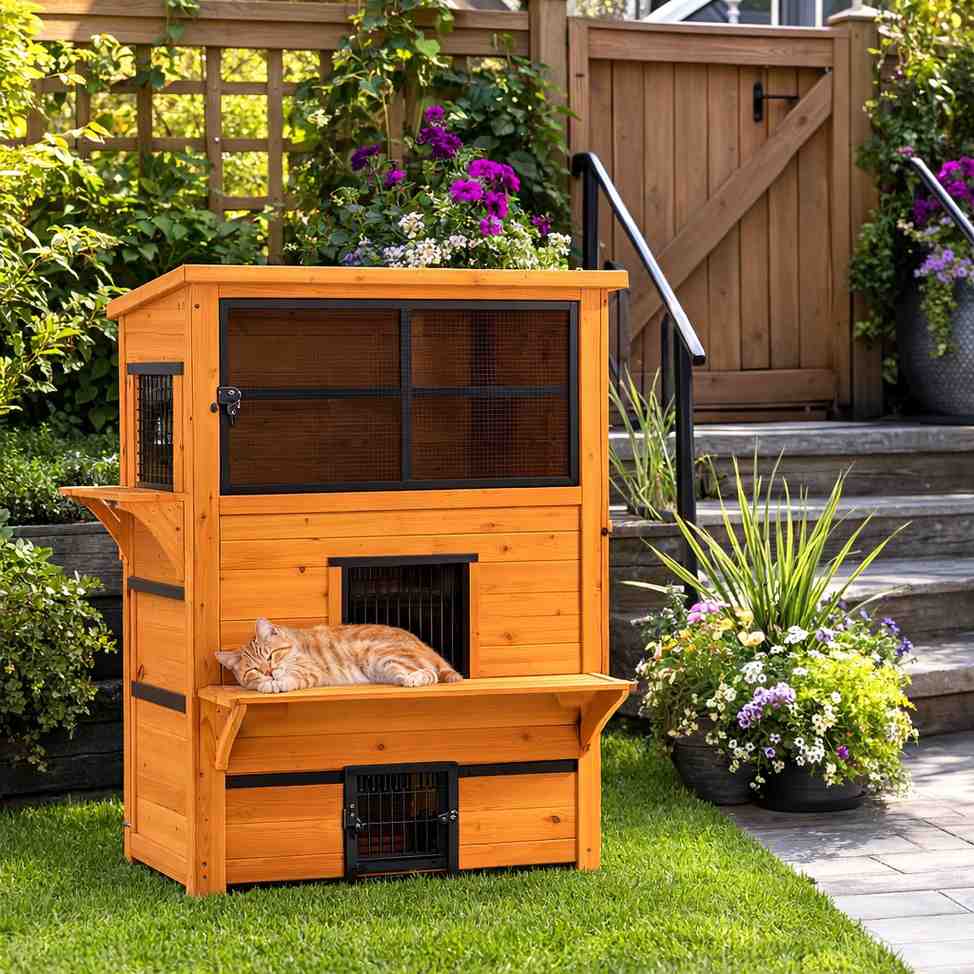
A cat house is a small enclosed structure designed specifically for cats. It provides shelter, warmth, and a sense of safety.
Cat houses range from simple plastic shelters for outdoor or feral cats to decorative wooden structures that blend into your backyard, and even heated models built for cold climates.The term ‘cat house’ is broad. It covers outdoor cat shelters, insulated winter houses, multi-cat enclosures, indoor cat dens, and catios — which are large enclosed outdoor spaces.
Each type serves a different purpose, and choosing the right one depends on where your cat lives and what conditions it needs protection from.
Types of Cat Houses: Which One Do You Need?
Understanding the different categories will save you time and money. Below are the main types of cat houses available and what makes each one suitable for specific situations.
1. Outdoor Plastic Cat House
Plastic cat houses are among the most popular choices for outdoor and feral cats. They are lightweight, easy to clean, and naturally resistant to moisture. Most models are made from high-density polyethylene (HDPE), which does not absorb water and holds up well against rain, wind, and sunlight.
These shelters work well in mild to moderate climates. For colder regions, pair a plastic house with straw bedding or a self-warming pad to boost insulation.
- Durable and long-lasting outdoors
- Easy to wipe clean and sanitize
- Most models assemble without tools
- Best for: feral cat colonies, backyard cats, transitional outdoor spaces
2. Wooden Cat House
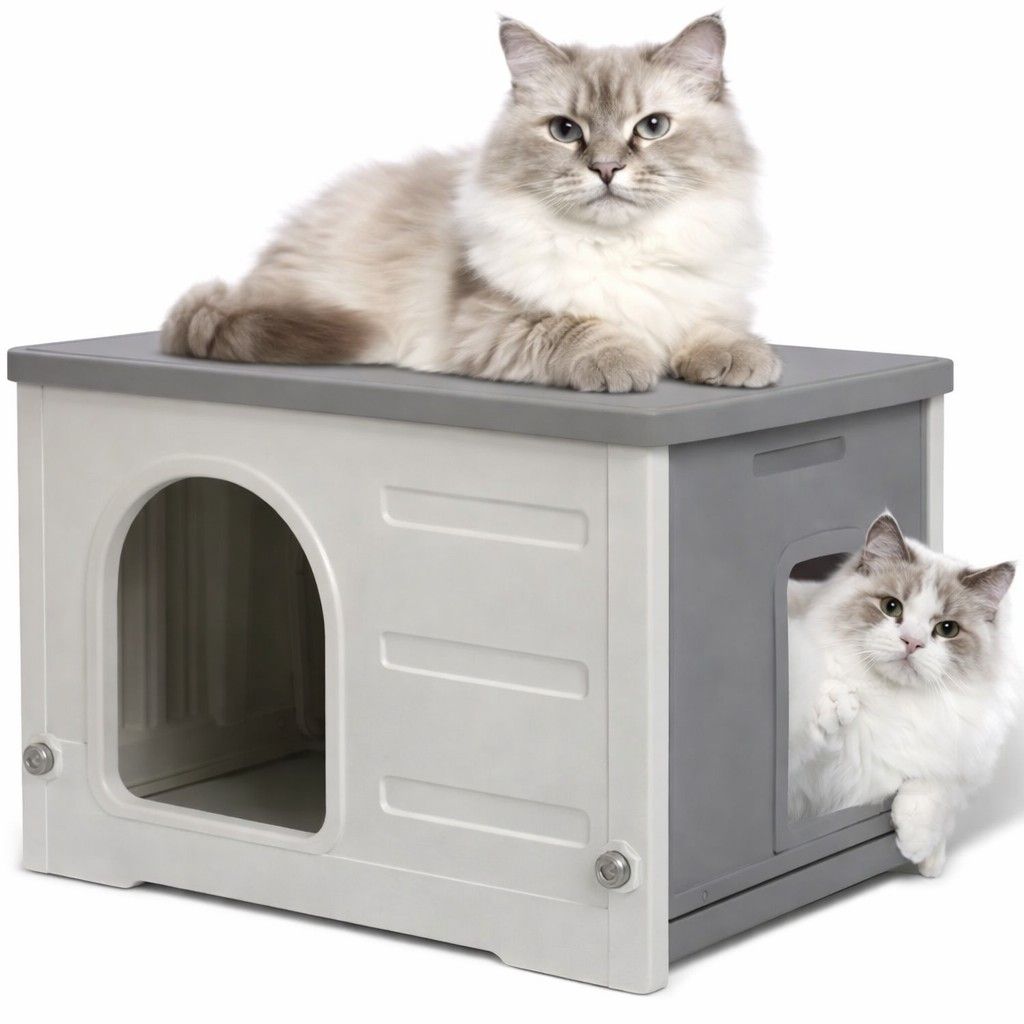
Wooden cat houses offer better natural insulation than plastic and are a favorite for cat owners who want a product that complements their garden or home exterior.
Cedar and fir are commonly used because they are naturally resistant to rot and insects.The key to a good wooden cat house is waterproofing.
Look for a model with a treated or painted exterior, overhanging roof, and sealed joints. Without proper sealing, wood can absorb moisture, swell, and eventually develop mold.
- Superior natural insulation
- Attractive appearance for patios and gardens
- Available in multi-tier designs for multiple cats
- Best for: backyard cats, mild to cool climates, aesthetic appeal
3. Insulated Cat House
An insulated cat house is specifically built to retain body heat, making it ideal for cats that live outdoors year-round. Quality insulated models feature foam or reflective insulation panels on the walls, floor, and ceiling.
This traps the cat’s natural body warmth inside the shelter, keeping temperatures significantly warmer than outside even without a heater.
For best performance, choose a model with a raised floor to separate the cat from cold ground, a small entrance to limit heat loss, and a removable roof or panel for easy cleaning.
- Designed to maintain warmth using the cat’s own body heat
- Raised floors protect from ground moisture and cold
- Small entrance openings reduce heat escape
- Best for: winter use, cold climates, outdoor cats in northern regions
4. Heated Cat House
A heated cat house includes a built-in electric heating pad or warming element. These are designed for extreme cold weather conditions where insulation alone is not enough to keep a cat warm.
Most heated models use thermostatically controlled, pet-safe heating pads that activate when temperatures drop below a set threshold.Always look for MET or ETL-listed heating elements, which confirms they meet electrical safety standards.
Avoid placing heated houses in locations where water can enter and contact the electrical components.
- Built-in thermostatically controlled heating
- Pet-safe, low-wattage heating elements
- Ideal for winter temperatures below freezing
- Best for: cold climate outdoor cats, feral colony management in winter
5. Multi-Cat House
If you care for more than one outdoor cat or manage a feral colony, a multi-cat house provides enough space for several cats to shelter together.
These structures typically feature two or more chambers, separate entry and exit points to prevent trapping, and enough floor area for multiple cats to rest without crowding.
Multiple entry points are important. A cat trapped by a bully or a predator inside a single-exit shelter is at serious risk. Always verify that multi-cat houses have at least two door openings.
- Multiple chambers or floors reduce territorial stress
- Dual entry/exit points for escape routes
- Larger total area distributes body heat among multiple cats
- Best for: feral colonies, bonded cat pairs, multi-cat households with outdoor access
6. DIY Cat House
A DIY cat house is a cost-effective option for those who want a custom solution. A well-known and proven method uses a large plastic storage bin with a smaller bin placed inside, with the space between them filled with straw for insulation.
Cut an entry hole, add a flap, and you have a functional winter shelter for under $20.DIY options can be tailored to any size, insulation level, or configuration. They are especially useful for managing large feral colonies on a budget.
- Very low cost to build
- Fully customizable to your cat’s needs
- Easily replaced or rebuilt if damaged
- Best for: budget-conscious owners, feral colony caregivers, custom builds
Quick Comparison: Cat House Types at a Glance
Use this table to quickly compare the main types of cat houses based on what matters most when making a purchase decision.
| Type | Best For | Insulation | Weather Resistant | Price Range | Assembly |
| Plastic Cat House | Outdoor / Feral Cats | Moderate | Yes | $20 – $60 | Easy |
| Wooden Cat House | Backyard / Patio | Good | With Treatment | $50 – $150 | Moderate |
| Heated Cat House | Cold Climates | Excellent | Yes | $80 – $180 | Easy |
| Insulated Cat House | Winter / All Seasons | Excellent | Yes | $60 – $130 | Easy |
| Multi-Cat House | Colonies / 2+ Cats | Good | Yes | $100 – $200 | Moderate |
| DIY Cat House | Custom Needs | Varies | Depends on Build | $10 – $50 | Advanced |
How to Choose the Right Cat House: Complete Buying Guide
Knowing which type of cat house you want is only the first step. These are the most important features to evaluate before you buy.
Size and Interior Space
A cat house should be large enough for the cat to stand, turn around, and lie down fully stretched. For a single average-sized cat, a floor area of at least 18 by 18 inches and a ceiling height of 16 inches is a minimum baseline.
Bigger is not always better when it comes to insulation. A smaller interior allows the cat’s body heat to warm the space faster and retain warmth longer. For cold climates, prioritize a snug fit over extra space.
Weatherproofing and Waterproofing
An outdoor cat house must keep rain and wind out completely. Look for a sloped or overhanging roof to shed water away from the entrance, sealed seams and joints, and a raised floor that keeps the interior dry even on wet ground.
Some plastic models include drainage holes in the floor as a backup measure.If you live in a region with heavy snow, make sure the roof is strong enough to bear the weight of accumulation without collapsing.
Insulation Quality
Insulation is the single most important feature for any cat house used in cold weather. The best insulation materials for cat houses include expanded polystyrene (EPS) foam, extruded polystyrene (XPS) foam, and reflective emergency blanket material.
Straw — not hay — is the best natural filler material because it does not absorb moisture and provides excellent insulation.Avoid towels, blankets, and newspaper inside outdoor cat houses. These materials absorb moisture and can actually make a cat colder when wet.
Entry Point Design
The entry hole size matters more than most buyers realize. A hole diameter of 6 to 8 inches is large enough for most cats while being too small for larger predators like raccoons and opossums.
A flap door made from heavy vinyl or clear plastic reduces wind and heat loss without preventing the cat from entering.For multi-cat shelters, having a second entry point at the opposite end of the shelter is important for safety, allowing a cat to escape if cornered.
Ease of Cleaning
A cat house that cannot be easily cleaned will quickly become unsanitary. Look for a removable roof, hinged door, or split-body design that gives you full access to the interior.
For plastic models, a quick wipe with diluted pet-safe disinfectant is usually all that is needed. Wooden models may require more thorough drying after cleaning to prevent moisture retention.
Elevation and Ground Contact
A raised floor lifts the cat off cold, damp ground and reduces the risk of moisture entering from below. Even a few inches of elevation makes a noticeable difference in warmth and dryness. Models with removable legs or integrated platforms are ideal.
Safety and Material Quality
Check that the materials used are non-toxic, BPA-free, and free from sharp edges or protrusions. Electrical components in heated models should carry a recognized safety certification such as MET, ETL, or UL listing.
Avoid models with loose hardware or small parts that cats could ingest.
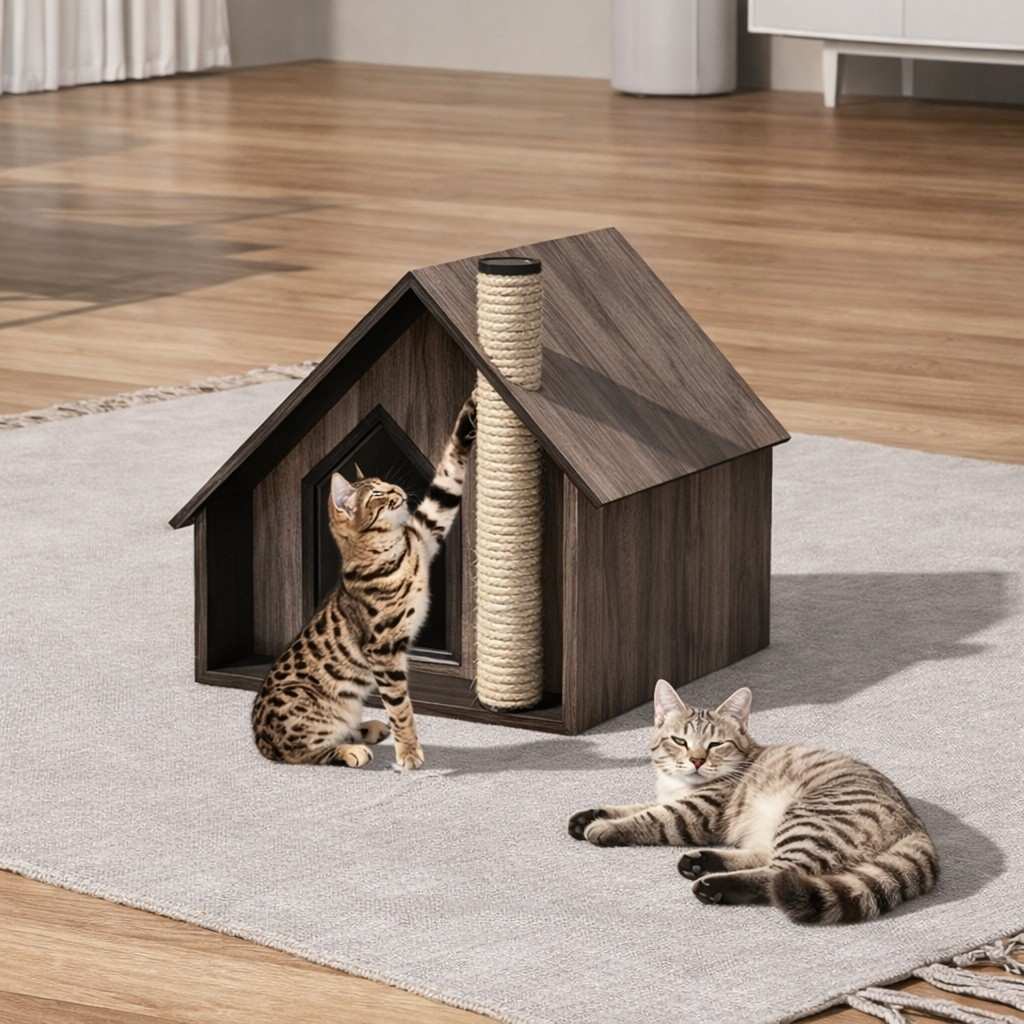
Where to Place a Cat House for Best Results
The location of a cat house affects how much the cat uses it and how well it performs. Follow these placement guidelines to get the most from your shelter.
- Place the entry door facing away from prevailing winds to reduce drafts inside.
- Elevate the house on a porch, deck, or pallet so it sits off cold or damp ground.
- Position the shelter in a partially shaded area to avoid summer overheating and direct sun exposure on the entry.
- Keep the house away from heavy foot traffic, loud areas, and visible open spaces where cats feel exposed to predators.
- In feral colony setups, place multiple smaller shelters rather than one large communal house to reduce territorial competition.
- Avoid placing the house directly under a roof edge where water or snow may drip onto the structure.
Cat House Tips by Season
Winter Cat House Setup
In winter, the primary goal is warmth retention. Fill the interior with clean, dry straw. Replace straw monthly or whenever it becomes damp.
If using a heated model, run the power cord safely through a protected entry route and use a weatherproof outdoor extension cord rated for outdoor use.Check the house regularly after heavy snow or ice storms to ensure the entrance is not blocked and the roof has not been damaged by snow load.
Summer Cat House Setup
In summer, ventilation and shade become the priority. Remove heavy insulation panels if the model allows. Position the house in shade for the hottest part of the day. Some owners use a cooling mat inside during heat waves.
Ensure there is fresh water available near the shelter at all times.
Rainy Season Maintenance
Inspect all seams, joints, and the roof regularly for signs of water intrusion. Dry out bedding frequently and replace it at the first sign of moisture.
A waterproof cover placed over a wooden house during heavy rain can extend its lifespan significantly.
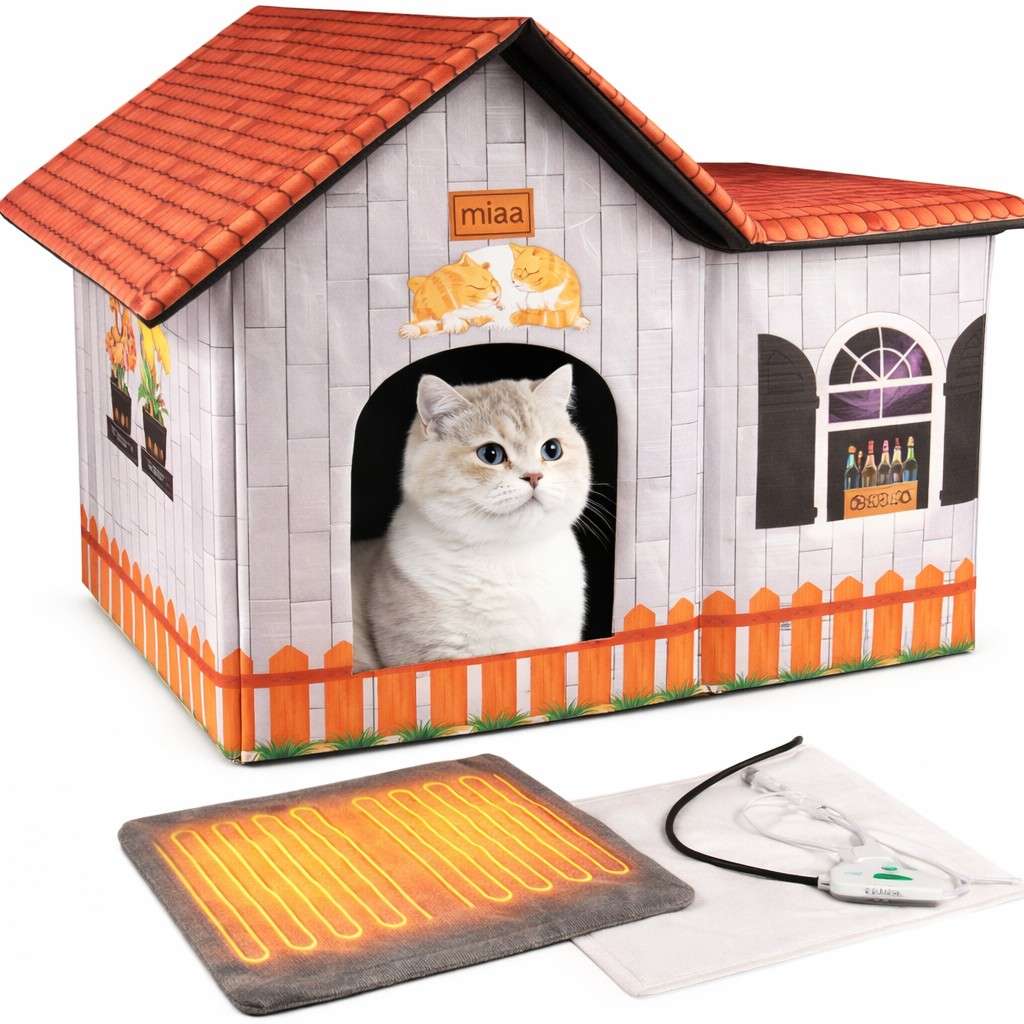
Indoor Cat Houses: What Are Your Options?
Not all cat houses are for outdoor use. Indoor cat houses — sometimes called cat dens, cat caves, or cat condos — serve a different purpose. They give indoor cats a private, enclosed resting space that satisfies their natural instinct to seek shelter in small, protected spaces.
Indoor cat houses come in fabric, wicker, felt, and wood. Unlike outdoor models, they do not need to be weatherproof. Instead, focus on comfort, washability, and how well the size matches your cat.
- Felt or fabric cat caves: Soft, collapsible, easy to wash, ideal for cats that like enclosed warmth.
- Wooden cat dens: Stylish and durable, often designed to double as furniture.
- Elevated cat condos with attached houses: Combine climbing space with a resting chamber.
- Wicker cat houses: Breathable and lightweight, good for warm indoor environments.
The main SEO and shopping distinction is this: when people search for ‘cat house’ they are often looking for outdoor shelters, but a significant share are looking for indoor options.
If you are shopping for an indoor cat, search specifically for ‘indoor cat house,”cat cave,’ or ‘cat den’ to find the right product category.
Cat Houses for Feral and Stray Cats
Feral and community cats have the most urgent need for quality outdoor shelter. Unlike owned outdoor cats, feral cats do not have the option to come inside when conditions worsen.
Providing a well-built cat house can significantly reduce exposure mortality during extreme weather.Trap-Neuter-Return (TNR) programs, which are recommended by animal welfare organizations worldwide, often include providing outdoor shelters as a core part of colony management.
A feral cat that has been TNR’d and returned to its territory needs reliable, weatherproof shelter to survive long-term.
Key requirements for feral cat shelters: small entry hole (6 inches), two exit points, insulated walls and floor, straw bedding, elevated base, and easy access for the caregiver to clean and restock.
Community cat caregivers managing large colonies often build multiple DIY shelters using insulated storage bins. This approach is low-cost, scalable, and effective even in sub-zero temperatures.
Also check: Cat shelter Dubai
What Is a Catio? How It Differs From a Cat House
A catio — a portmanteau of ‘cat’ and ‘patio’ — is an enclosed outdoor space that allows cats to experience the outdoors safely without being exposed to traffic, predators, or the risk of getting lost.
Unlike a traditional cat house, a catio is a larger structure that a cat can move around in, often featuring shelves, ramps, tunnels, and perches.Catios range from small window-mounted enclosures to large freestanding structures that cover an entire deck or yard.
They are especially popular for indoor cats whose owners want to provide outdoor enrichment without the risks of free-roaming outdoor access.
- Window catios: Mount directly outside a window; small and affordable.
- Freestanding catios: Large enclosed runs with frames and wire mesh; maximum outdoor experience.
- Tunnel catios: Connect the house to the outdoors through a long enclosed tube system.
- Custom catios: Built to match the dimensions and style of your specific home.
Frequently Asked Questions
Common Mistakes to Avoid When Buying a Cat House
Many buyers make the same avoidable mistakes. Knowing these in advance will help you choose a product that actually works.
- Using hay instead of straw: Hay absorbs moisture and can develop mold that harms cats. Always use straw for outdoor cat house bedding.
- Choosing a house that is too large: A bigger interior is harder for the cat to warm with body heat. Size the house to the cat, not to your preference.
- Placing the house on cold ground: Direct ground contact transfers cold into the floor, eliminating much of the shelter’s insulation benefit. Elevate the house.
- Ignoring the entry hole size: A hole that is too large admits wind, cold, and potential predators. Size it at 6 to 8 inches for most domestic cats.
- Skipping weatherproofing on wooden models: Untreated wood absorbs moisture and deteriorates quickly. Seal or paint wood shelters before placing them outdoors.
- Not checking safety certifications on heated models: Only buy heated cat houses with ETL, UL, or MET-certified heating elements to ensure pet and home safety.
Final Thoughts
The best cat house depends on your cat’s lifestyle, your climate, and your budget. Outdoor cats in cold areas do best with an insulated or heated house, while backyard cats in mild weather benefit from a waterproof wooden shelter. For indoor cats, a soft cave or wooden den gives the comfort and privacy they love.
Choose a cat house with durable materials, easy cleaning, and proper weather protection when needed. A well-made cat house gives your cat a safe, cozy place to rest in every season.