Every minute, the world uses roughly one million plastic bags. Most of them are thrown away within 15 minutes of use and take up to 1,000 years to break down. Reusable bags offer a practical, cost-effective, and environmentally responsible alternative.
Whether you are shopping for groceries, packing school lunches, or storing fresh produce, there is a reusable bag designed for every task.
This guide covers everything you need to know about reusable bags — from the materials they are made of, to the different types available, to expert advice on choosing, using, and caring for them. By the end, you will have a clear picture of which reusable bag is right for your lifestyle.
What Are Reusable Bags?
Reusable bags are bags designed for repeated use across multiple shopping trips, meals, and daily tasks. Unlike single-use plastic bags, which are discarded after a single use, reusable bags are built from durable materials that withstand regular washing and heavy loads.
They come in a wide range of sizes, shapes, and materials — from large canvas grocery totes to small silicone food storage bags.
The core purpose of a reusable bag is simple: use it again and again to replace disposable alternatives. A single reusable grocery bag can replace more than 500 plastic bags over its lifetime, making it one of the most accessible steps anyone can take toward a lower-waste lifestyle.
Why Switch to Reusable Bags? Key Benefits Explained
1. Significant Reduction in Plastic Waste
Americans alone use approximately 100 billion plastic bags every year. Less than 10 percent of those bags are recycled. The rest end up in landfills, waterways, and oceans, where they break down into microplastics that contaminate soil, water, and the food supply.
Switching to reusable bags directly reduces the demand for single-use plastic and keeps plastic pollution out of the environment.
2. Long-Term Cost Savings
A quality reusable grocery bag costs between $1 and $20 and can last for years with proper care. In contrast, many cities and states now charge fees for single-use plastic or paper bags. Over time, reusable bags pay for themselves and continue saving money with every shopping trip.
3. Greater Durability and Carrying Capacity
Most reusable bags are significantly stronger than their plastic counterparts. Canvas and woven polypropylene bags can carry 20 to 40 pounds without tearing.
Many feature reinforced handles, wider bases, and structured sides that make loading and unloading groceries easier and safer.
4. Healthier Choice for Food Storage
High-quality reusable food storage bags made from food-grade silicone or BPA-free materials are safer for carrying and storing food than plastic bags that may leach harmful chemicals. Reusable sandwich bags, snack bags, and produce bags keep food fresh without the health concerns associated with low-grade plastics.
5. Legislative Momentum
More than a dozen U.S. states and hundreds of cities worldwide have enacted bans or fees on single-use plastic bags. Many more regions are following suit. Adopting reusable bags now puts you ahead of these changes and ensures you are never caught without a bag at checkout.
Types of Reusable Bags | A Complete Overview
Reusable Grocery Bags and Shopping Totes
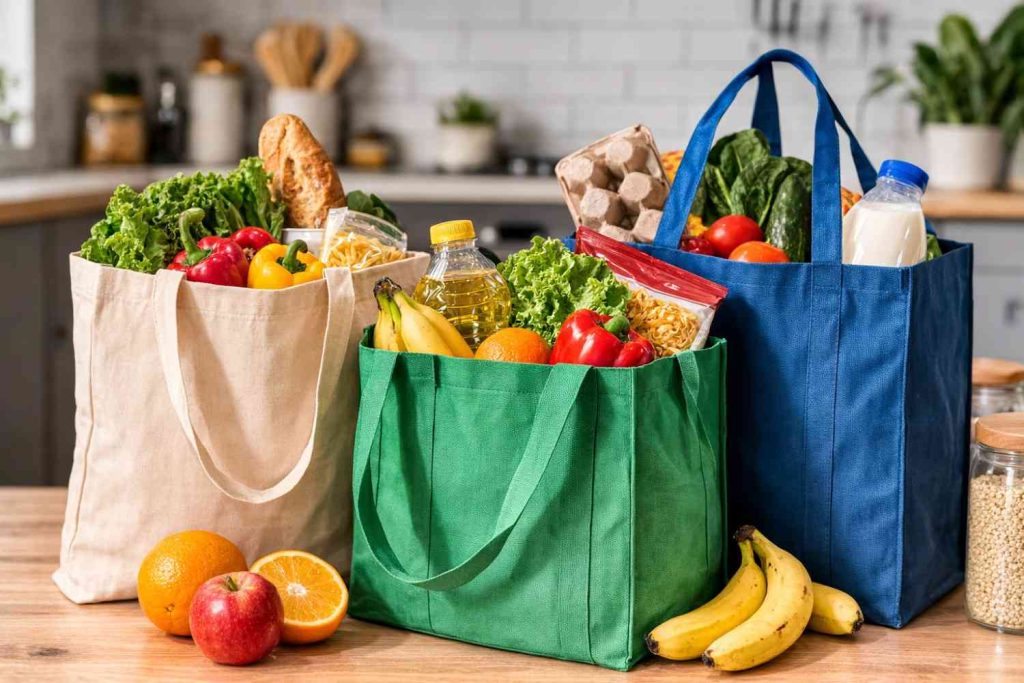
Reusable grocery bags are the most common type. They are typically large, flat-bottomed, and structured enough to hold heavy items like canned goods, bottles, and fresh produce. Cotton canvas totes, woven polypropylene bags, and recycled PET bags are the most popular options for grocery shopping.
Look for reinforced handles and a base capacity of at least 20 to 30 liters if you do regular full-cart grocery runs.
Reusable Produce Bags
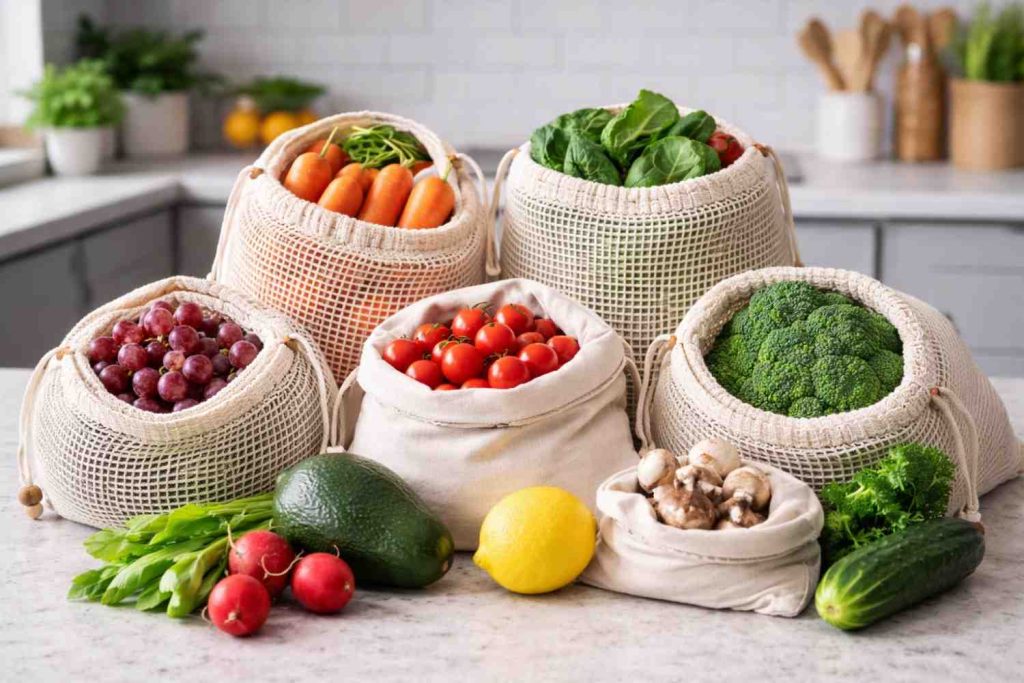
Reusable produce bags are lightweight mesh or fabric bags that replace the thin, roll-off plastic bags found in the produce section. Made from organic cotton mesh or recycled polyester, they allow airflow to keep fruits and vegetables fresh.
Most are machine washable and come in multipacks so you can weigh and sort different items during a single trip.
Reusable Sandwich and Snack Bags
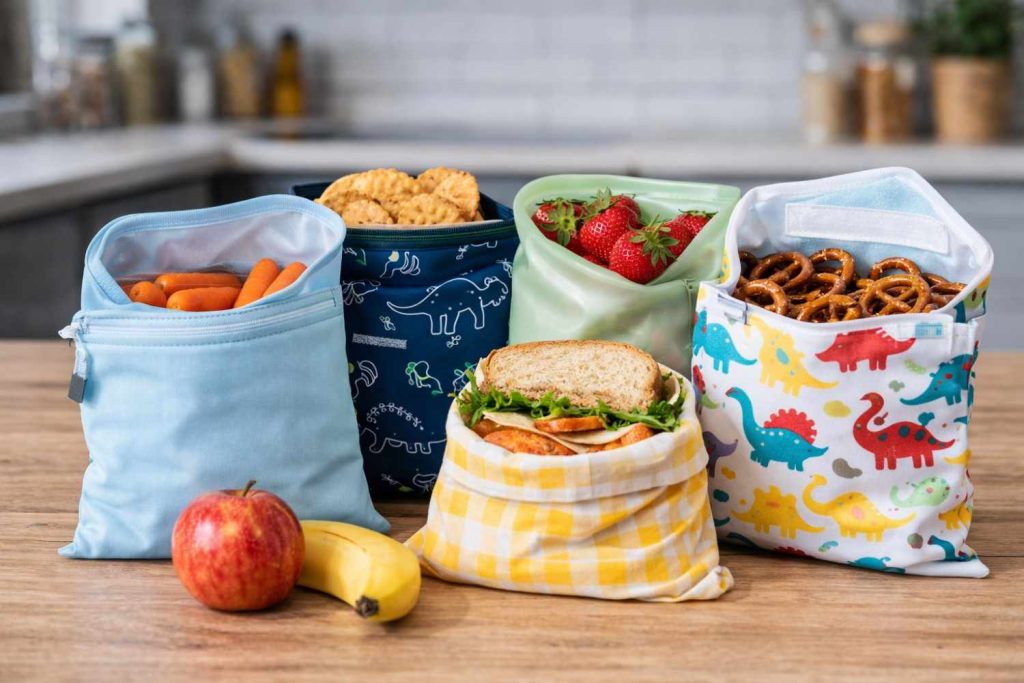
Reusable sandwich bags and snack bags have become popular choices for school lunches, road trips, and daily snacking. They come in fabric designs with velcro or zipper closures, or in food-grade silicone with leak-resistant seals.
The best reusable snack bags are easy to open and close, hold their shape when filled, and clean up quickly in the dishwasher or with a quick hand wash.
Reusable Silicone Food Storage Bags
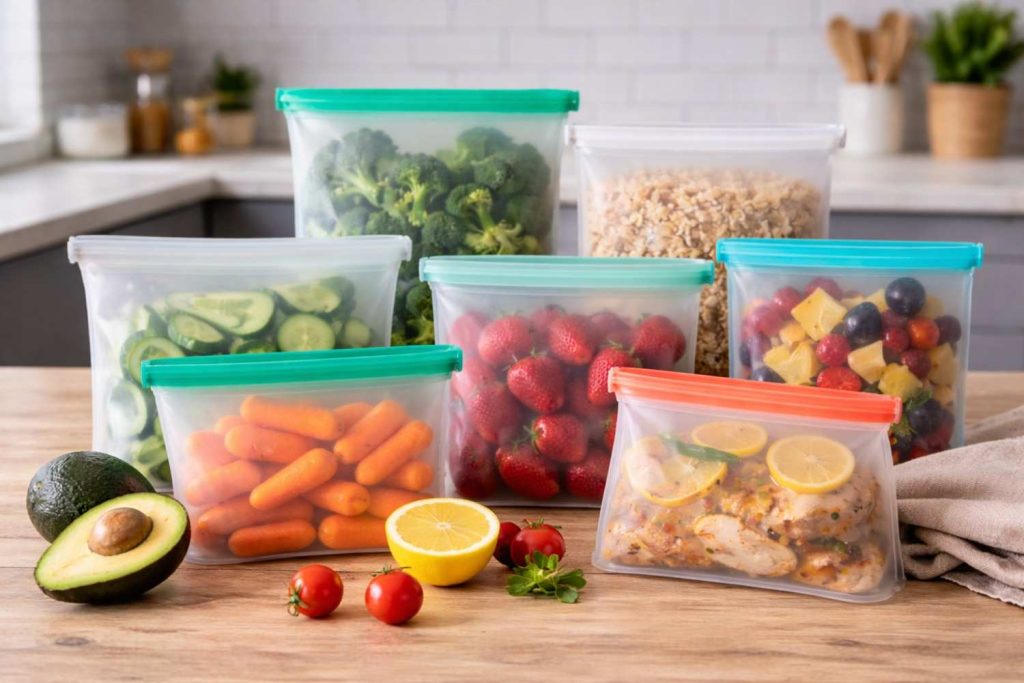
Silicone food storage bags are the most versatile reusable option for the kitchen. They are airtight, leak-proof, and safe for use in the freezer, microwave, and dishwasher. Food-grade silicone contains no BPA, PVC, or phthalates, making it a clean and safe choice for storing everything from sliced fruit to marinated proteins.
High-quality silicone bags can last for years without cracking, staining, or retaining odors.
Insulated Reusable Bags
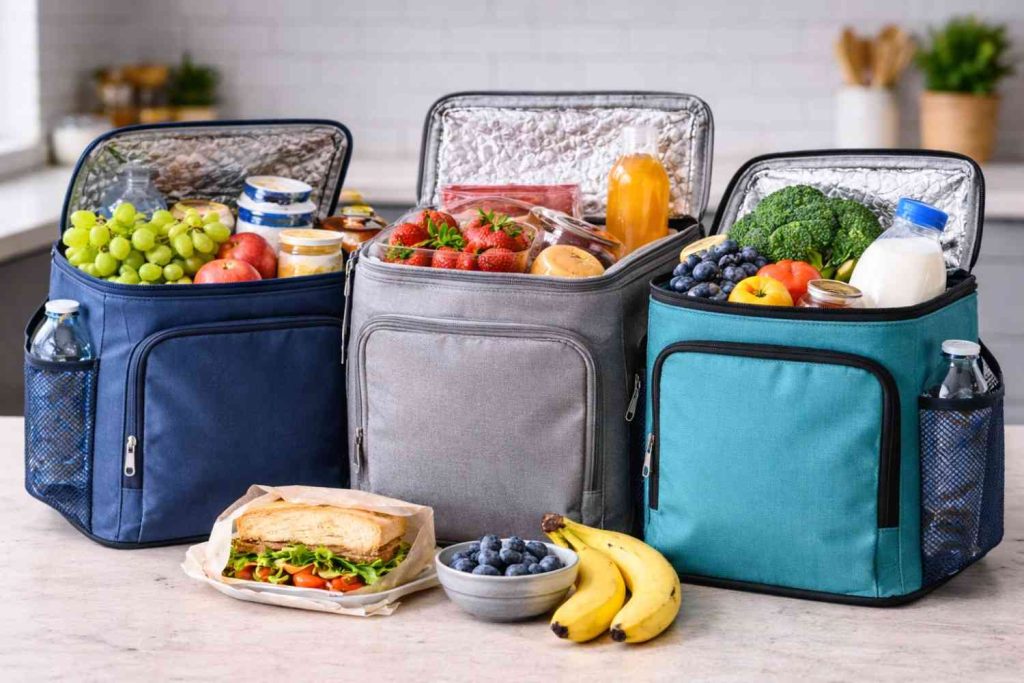
Insulated reusable bags use a thermal lining — often foil-backed or foam-padded — to keep temperature-sensitive items cold or warm. They are ideal for transporting frozen goods, dairy products, hot meals, and beverages. Many insulated reusable bags are large enough for a full grocery order and fold flat for easy storage when not in use.
Compact and Foldable Reusable Bags
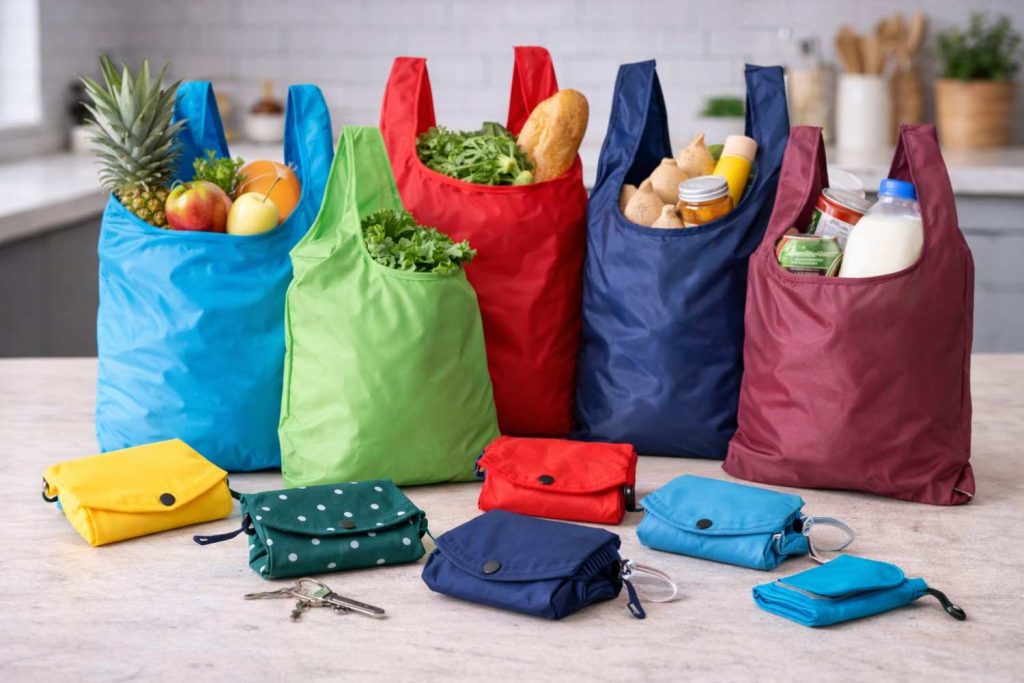
Foldable reusable bags pack down into a small pouch or roll up tight enough to clip onto a keychain or drop into a purse. Usually made from lightweight ripstop nylon or polyester, they are designed for impulse shopping trips and everyday errands.
Despite their compact size, many can support 20 to 40 pounds — enough for a moderate grocery haul.
Reusable Bulk and Dry Goods Bags
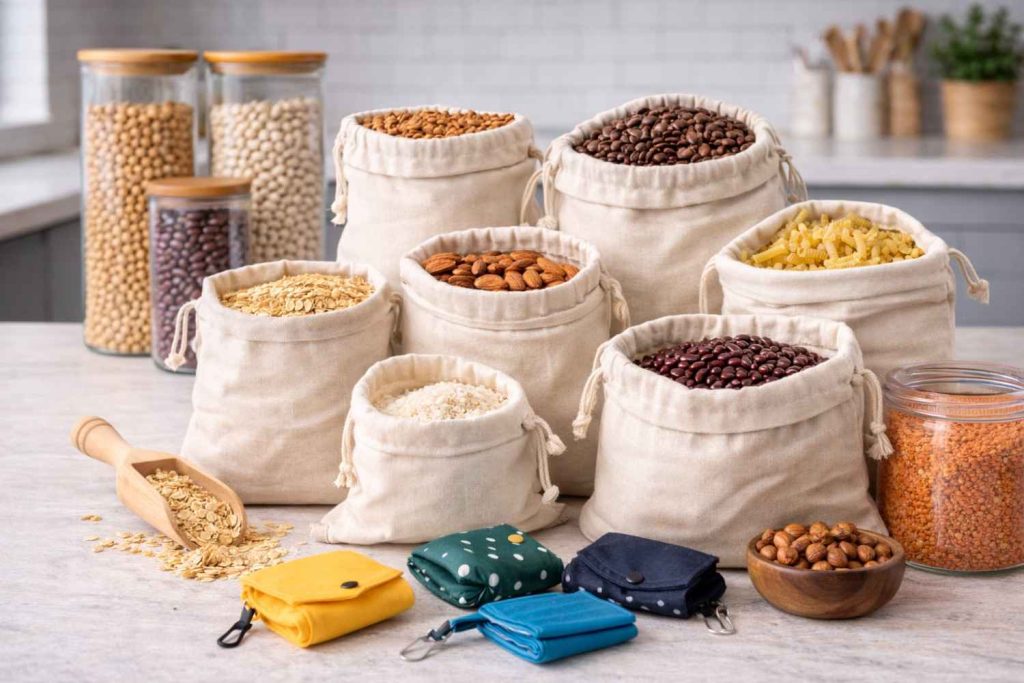
Fabric bags with drawstring closures are widely used for buying bulk dry goods such as grains, nuts, coffee, and spices. They are typically made from muslin or organic cotton and are breathable enough to allow dry goods to stay fresh. These bags also double as storage bags in the pantry.
Reusable Bag Materials: Which One Is Right for You?
The material of a reusable bag determines its durability, environmental impact, washing method, and best use case. Here is a breakdown of the most common materials on the market today.
Cotton and Organic Cotton
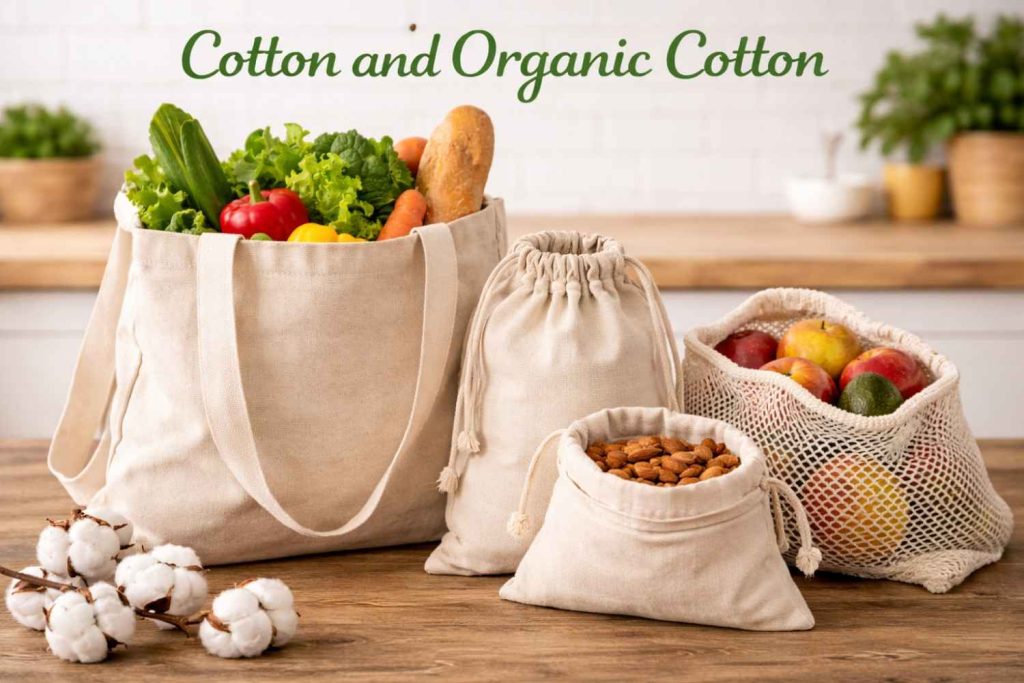
Cotton is one of the most popular materials for reusable shopping bags. It is natural, biodegradable, soft to the touch, and easy to print on for branding or personalization. Cotton canvas bags in the 10 to 12 ounce weight range are strong enough for regular grocery shopping.
Organic cotton, grown without synthetic pesticides or fertilizers, is a more sustainable option that reduces chemical runoff and soil impact.
Best for: Everyday shopping, farmers markets, branded totes, produce bags.
Care: Machine washable; wash in cold water and air dry to prevent shrinkage.
Hemp
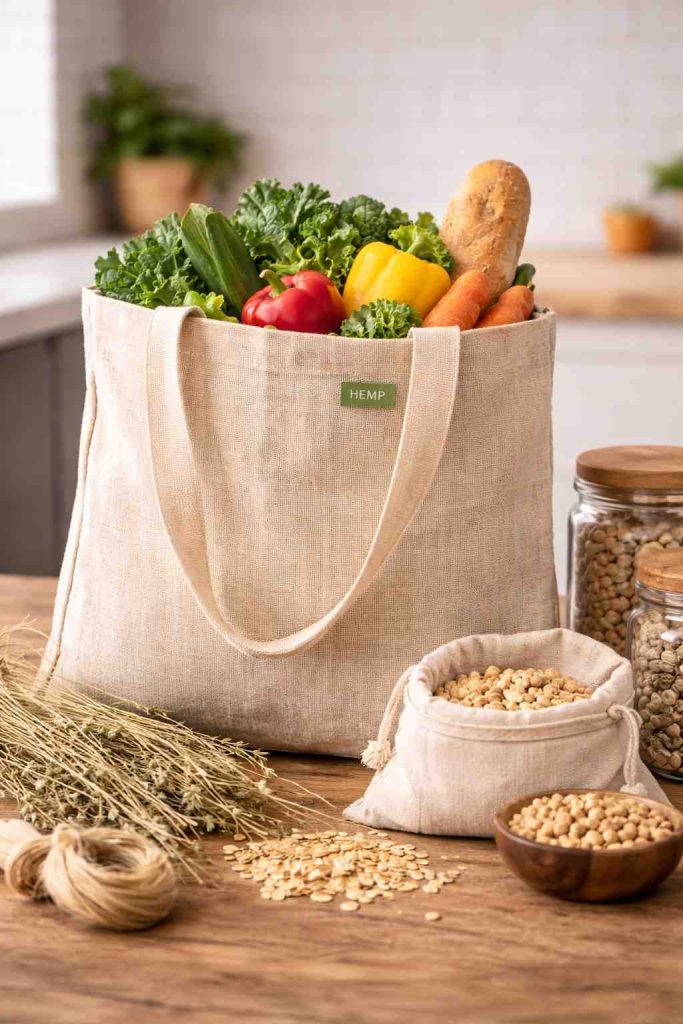
Hemp is one of the most durable natural fibers available. Hemp bags are several times stronger than cotton and naturally resistant to mold and UV damage. Hemp grows without pesticides, requires minimal water, and actually improves soil health as it grows.
Hemp bags are biodegradable at the end of their life and have one of the lowest carbon footprints among all reusable bag materials.
Best for: Heavy loads, outdoor use, zero-waste shoppers who want the most sustainable option.
Care: Machine washable; air dry for longevity.
Jute
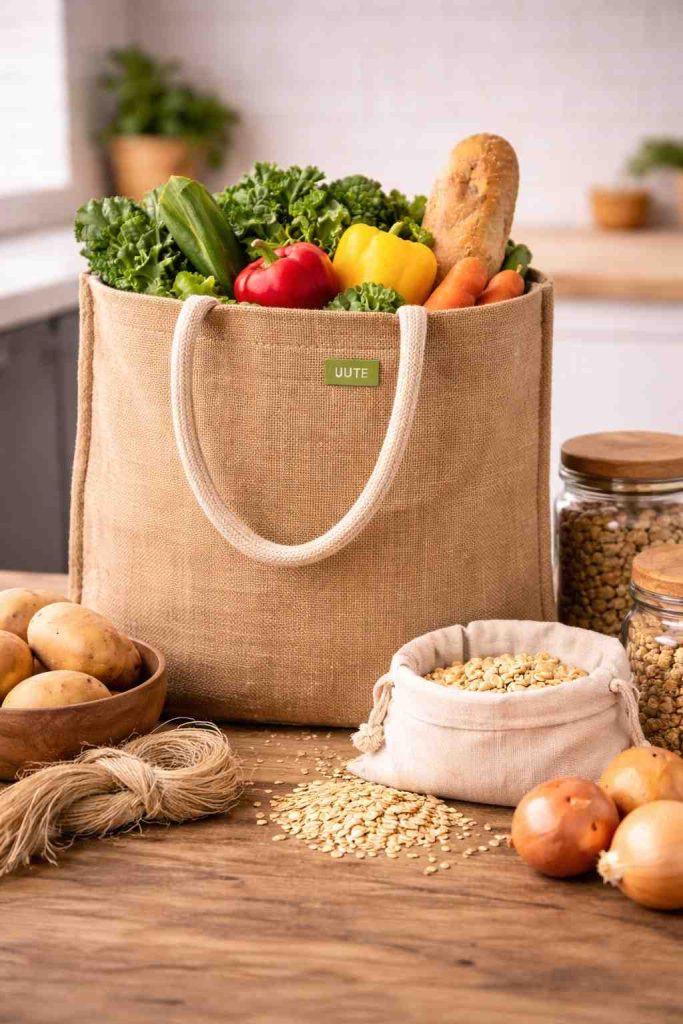
Jute is a natural fiber known for its strength and its characteristic golden, earthy appearance. Jute bags are sturdy and biodegradable, making them a popular eco-friendly choice. However, jute is not moisture-resistant and should not be used for carrying wet items or left in damp conditions.
Jute bags are best spot-cleaned or hand-washed rather than machine-washed.
Best for: Dry goods, farmers market totes, gift bags.
Care: Spot clean or hand wash; avoid extended moisture exposure.
Recycled PET (rPET)
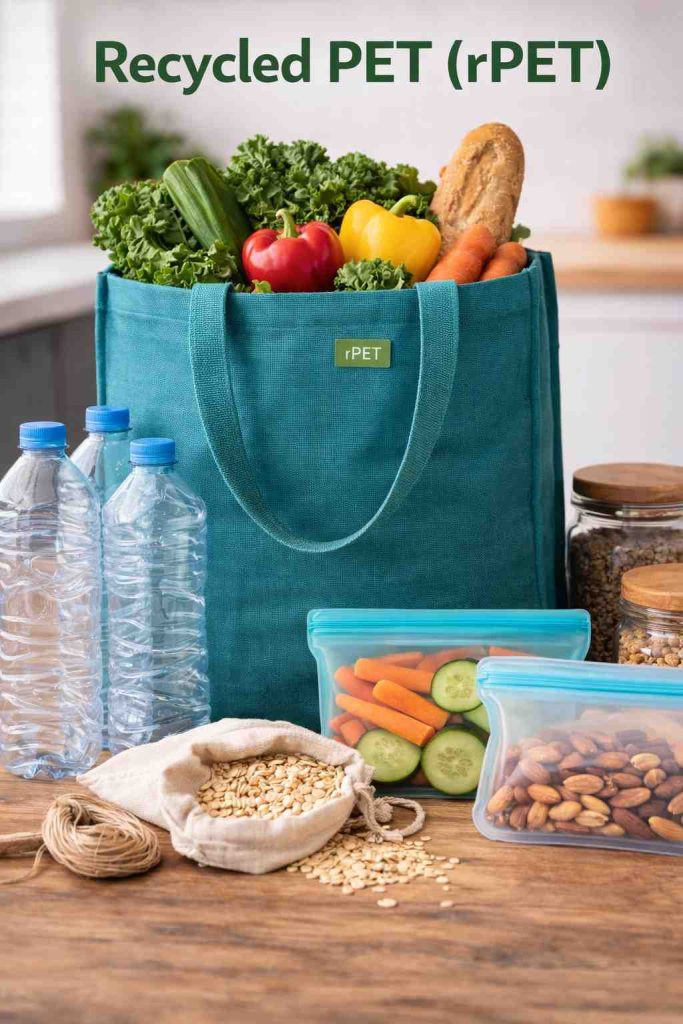
Recycled PET bags are made from post-consumer plastic bottles, giving a second life to materials that would otherwise end up in landfills or oceans. rPET bags are lightweight, durable, and water-resistant. They take approximately 33 percent less energy to produce than bags made from virgin plastic.
Brands like Adidas have brought widespread attention to recycled plastic as a material for consumer goods, and rPET reusable bags are now available in styles ranging from basic totes to structured grocery bags.
Best for: Shoppers who want a practical, low-footprint bag made from recycled materials.
Care: Machine washable; easy to wipe clean between uses.
Non-Woven and Woven Polypropylene
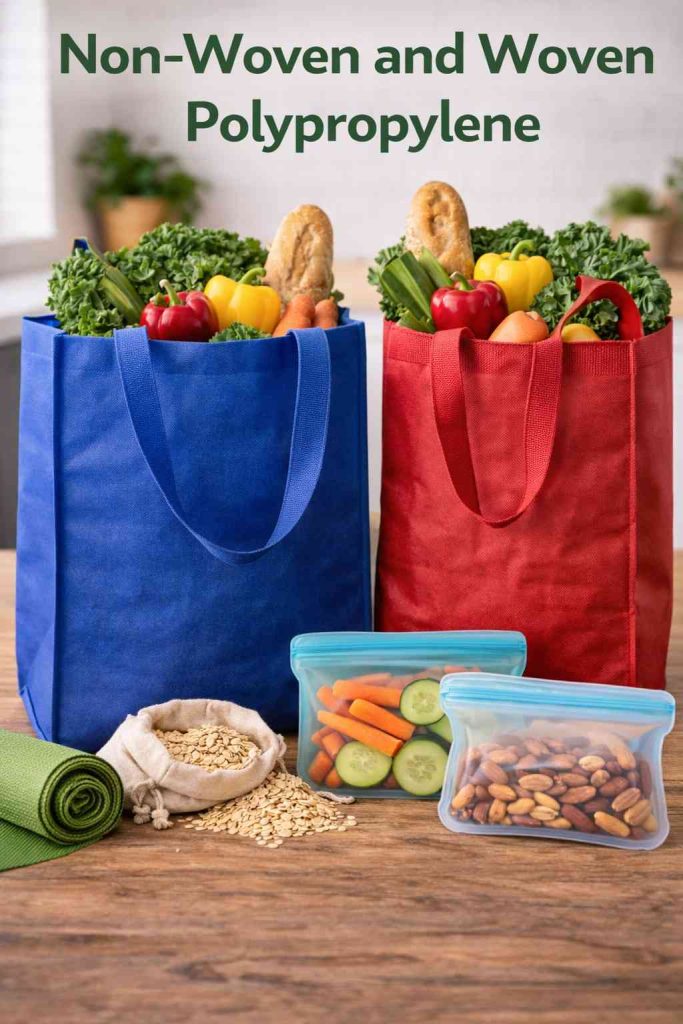
Polypropylene bags are among the most widely distributed reusable bags at retail checkout counters. Non-woven polypropylene is made by bonding plastic fibers through heat and pressure, resulting in a lightweight, affordable material. Woven polypropylene has a textured surface and is significantly stronger, capable of carrying heavy grocery loads over hundreds of uses.
Neither version is biodegradable, but their long lifespan means that each use has a very low per-use environmental footprint.
Best for: Budget-friendly everyday shopping, branded promotional bags.
Care: Wipe clean with a damp cloth; some styles are hand washable.
Food-Grade Silicone
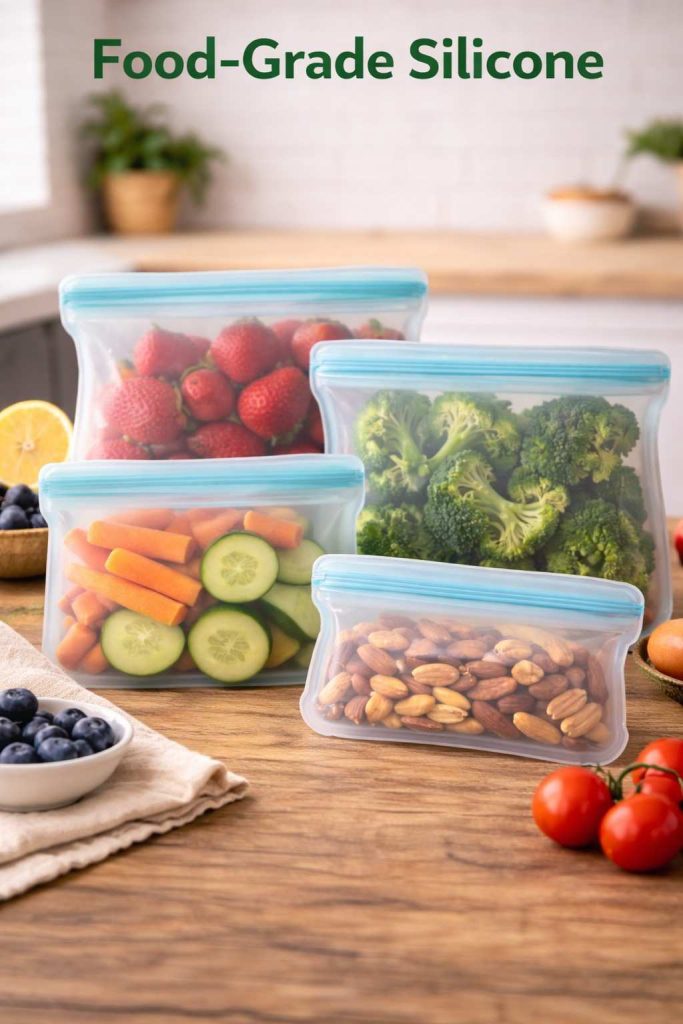
Silicone is the preferred material for reusable food storage bags, snack bags, and produce storage. Food-grade silicone is free of BPA, PVC, and phthalates, making it one of the safest options for storing food.
Silicone bags are freezer-safe, microwave-safe, and dishwasher-safe, and they do not stain or retain odors the way plastic can. They are more expensive than fabric alternatives but last significantly longer.
Best for: Food storage, meal prep, sous vide cooking, freezer storage.
Care: Dishwasher safe; can also be boiled or hand-washed with dish soap.
Nylon and Polyester
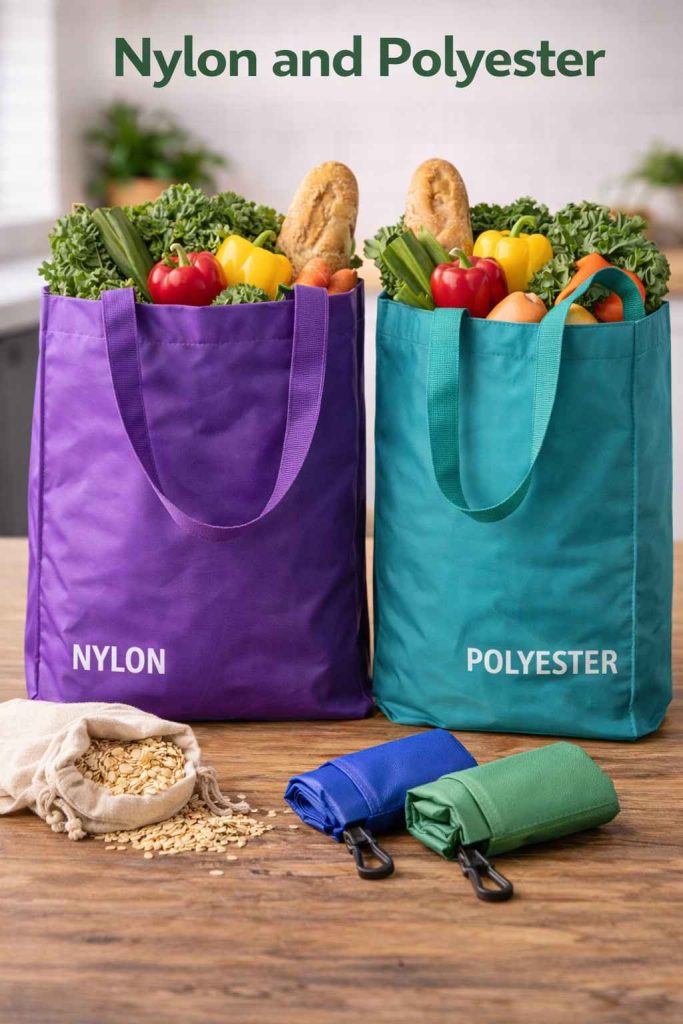
Lightweight nylon and polyester bags are ideal for compact, foldable designs. Both materials are water-resistant and easy to wipe clean. Polyester can be made from recycled materials (rPET), adding to its sustainability profile.
These bags are not biodegradable, but their durability and packability make them practical choices for everyday carry.
Best for: Foldable everyday bags, travel, emergency shopping bags.
Care: Machine washable; air dry.
Also Read here : storage box
Reusable Bag Materials at a Glance
| Material | Durability | Eco Score | Washable | Water Resistant | Best Use |
| Cotton | High | Good | Yes | No | Shopping, Produce |
| Organic Cotton | High | Excellent | Yes | No | Shopping, Food |
| Hemp | Very High | Excellent | Yes | Moderate | Heavy loads |
| Jute | Medium | Very Good | Spot only | No | Dry goods |
| rPET | High | Very Good | Yes | Yes | Grocery, Retail |
| Non-Woven PP | Medium | Fair | Wipe | Yes | Promo, Casual |
| Silicone | Very High | Very Good | Yes | Yes | Food storage |
| Nylon/Polyester | High | Fair | Yes | Yes | Foldable, Travel |
How to Choose the Right Reusable Bag |6 Key Factors
1. Identify Your Primary Use Case. The best reusable bag starts with knowing how you will use it. A large, structured canvas tote is ideal for full grocery runs. A silicone ziplock bag is better for packing snacks or storing leftovers. Lightweight nylon bags work best for impromptu shopping trips. Matching the bag to its main job is the most important step in the buying process.
2. Consider Load Capacity. Check how much weight the bag can handle. Most quality reusable grocery bags support between 20 and 50 pounds. For heavier loads such as bottles, canned goods, or bulk grains, choose woven polypropylene, hemp, or thick canvas.
For snacks and light produce, lighter materials are perfectly sufficient.
3. Evaluate Material Sustainability. If environmental impact matters to you, look for bags made from organic cotton, hemp, or recycled materials such as rPET. Certifications like GOTS (Global Organic Textile Standard) or OEKO-TEX indicate that a bag meets third-party environmental and safety standards.
Avoid bags made entirely from non-woven polypropylene if sustainability is a priority, as these are plastic-based and not biodegradable.
4. Check Closure Type. For food storage bags and lunch bags, the closure method matters. Zipper closures offer the best seal for liquids and crumbs. Velcro is easy to open and close but may collect lint over time. Press-seal silicone tops create airtight seals ideal for soups, sauces, and marinated foods.
For grocery totes, open tops or snap closures are the most practical.
5. Think About Washability. A reusable bag that is difficult to clean will not stay in rotation for long. Cotton, organic cotton, hemp, nylon, and rPET bags are generally machine washable. Silicone bags are dishwasher safe. Jute and some polypropylene bags require spot cleaning. Choose a washing method that fits your routine so the bag stays clean and hygienic with minimal effort.
6. Assess Packability and Storage. If you often forget your bags at home, choose compact styles that fold into built-in pouches or roll small enough to slip into a coat pocket. If storage space at home is limited, flat-folding grocery bags stack neatly on a shelf.
The more convenient a bag is to carry and store, the more likely you are to actually use it.
How to Care for Your Reusable Bags
Proper care extends the life of any reusable bag and ensures it stays safe for carrying food. Here are the best practices for each common bag type.
- Washing Cotton, Canvas, and Hemp Bags
Machine wash cotton and hemp bags in cold water on a gentle cycle with a mild, fragrance-free detergent. Turn the bag inside out before washing to protect any printed designs. Air dry or tumble dry on low.
Avoid high heat, which can cause shrinkage and weaken fibers over time. For bags used to carry raw meat or fish, wash after every use. For general grocery bags, washing every few weeks is sufficient.
- Cleaning Silicone Food Storage Bags
Silicone bags can be placed on the top rack of the dishwasher or washed by hand with warm soapy water. To clean the inside thoroughly, invert the bag, hold it open, and scrub with a bottle brush or sponge.
For stubborn stains from tomato sauce or other colorful foods, soak the bag in a baking soda and water solution for 30 minutes before washing. Silicone does not stain easily, but this method removes discoloration effectively.
- Caring for Polypropylene and Nylon Bags
Wipe non-woven polypropylene bags clean with a damp cloth and mild soap. Avoid submerging them in water for extended periods. Nylon and woven polypropylene bags can generally be machine washed on a gentle cycle and air dried.
Check manufacturer care instructions for specific guidance.
- Drying and Storage Best Practices
Always allow reusable bags to dry completely before storing them, especially fabric bags that held wet produce or leaking containers. Storing a damp bag in a closed cabinet encourages mold and mildew growth.
Hang bags to air dry, or lay them flat on a clean surface. Once dry, fold or roll them neatly and store them somewhere you will actually remember to grab them — near the front door, in your car, or clipped to your everyday bag.
Frequently Asked Questions About Reusable Bags
The Bottom Line | Why Reusable Bags Are Worth the Switch
Reusable bags are a simple and effective way to reduce waste, save money, and combat plastic pollution.
By choosing the right materials and designs for your needs, you can make a lasting eco-friendly impact. Start small with a few quality bags, and as you build the habit, you’ll contribute to a more sustainable lifestyle.