Most people clean their floors and countertops regularly. Ceiling fans? Not so often. Yet a dirty ceiling fan can push hundreds of dust particles into the air every time it runs. If your home has high ceilings, the problem gets worse — reaching those blades becomes a real challenge without the right tool.
This guide covers the best tools for cleaning high ceilings and fans in 2026. You will find expert-reviewed picks, a clear comparison table, and a step-by-step cleaning method you can follow today. Whether you live in a standard apartment or a villa with vaulted ceilings, there is a tool on this list that fits your needs.
Why Cleaning High Ceilings and Fans Matters
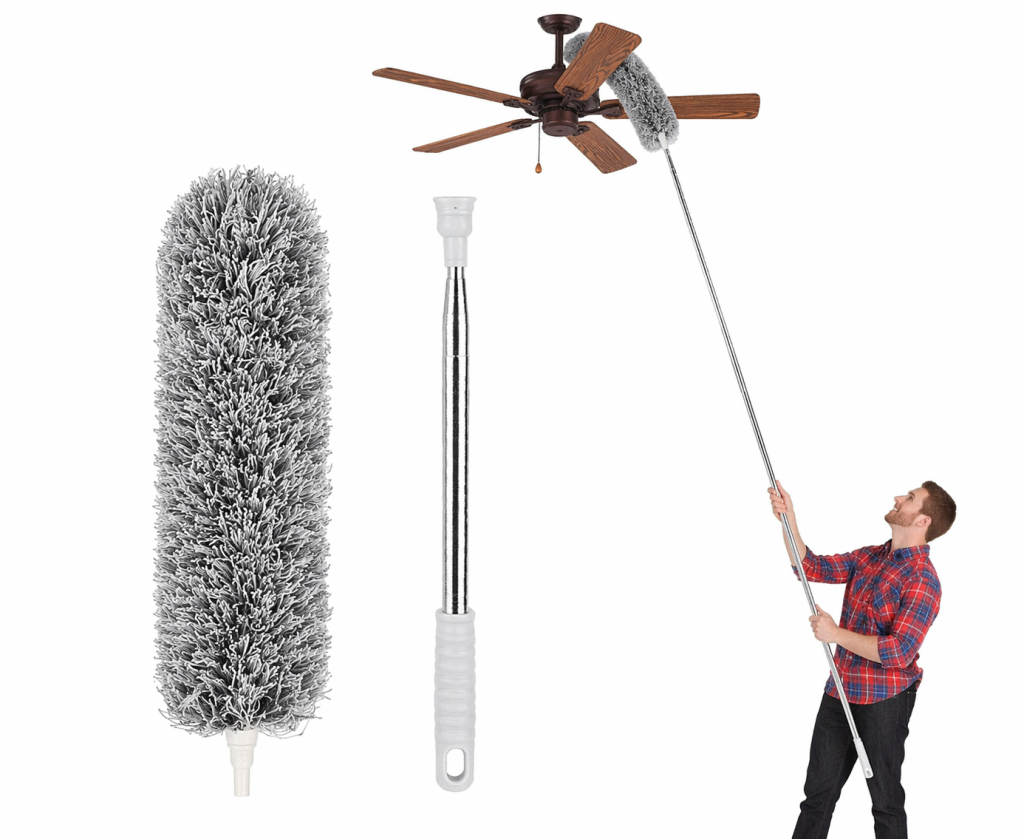
Dust accumulates on fan blades quickly, especially in warm or humid climates.
A ceiling fan with dusty blades does not just look bad. As the fan rotates, those particles become airborne and circulate through your living space. This matters for several reasons:
- Indoor air quality: Dust, pet dander, and allergens on fan blades get distributed throughout the room with every rotation.
- Fan performance: Dust buildup creates imbalance on the blades, causing wobbling, noise, and reduced airflow efficiency.
- Energy consumption: An unbalanced or dusty fan works harder to move air, using more electricity over time.
- Respiratory health: Airborne dust is a trigger for asthma, allergies, and general respiratory discomfort.
- Fan lifespan: Dust that enters the motor housing can reduce the life of the unit significantly.
Simply put, cleaning your ceiling fans regularly protects your health, your home, and your investment.
The Challenge of Cleaning High Ceilings
High ceilings — common in villas, open-plan homes, and commercial spaces — create a specific problem. Standard ceiling height is around 8 to 9 feet. Many modern homes have ceilings of 10 to 14 feet or higher. At that height, a step stool or even a standard ladder becomes impractical, uncomfortable, or outright dangerous.
The solution is to choose a cleaning tool with enough reach to do the job from the ground. This is where extendable pole dusters become the clear winner over every traditional method.
Pro Tip: Always turn off the ceiling fan and wait for the blades to come to a complete stop before you begin cleaning. Attempting to clean a moving fan is a safety risk and pushes dust further into the air.
Quick Comparison: Best Tools for Cleaning High Ceilings and Fans
| Tool | Best For | Max Reach | Ladder Needed | Dust Control | Rating |
| 7 Pcs Feather Duster Set with 30–100″ PoleTop Pick | High ceilings, fans, all surfaces | 100 inches (8.3 ft) | No | Excellent | ★★★★★ 5.0 |
| Microfiber U-Shape Fan Duster | Fan blade cleaning only | ~48 inches | Sometimes | Very Good | ★★★★ 4.0 |
| Vacuum with Brush Attachment | Deep cleaning, allergy-prone homes | Limited by hose | Often | Very Good | ★★★★ 3.8 |
| Pillowcase Technique | Budget option, standard ceilings | Standard arm reach | Yes | Good | ★★★ 3.2 |
| Microfiber Cloth + Cleaning Solution | Deep grime on blades | Standard arm reach | Yes | Good | ★★★ 3.0 |
Best Tools for Cleaning High Ceilings and Fans — Full Reviews
7 Pcs Feather Duster Set with 30–100 Inch Extendable Pole
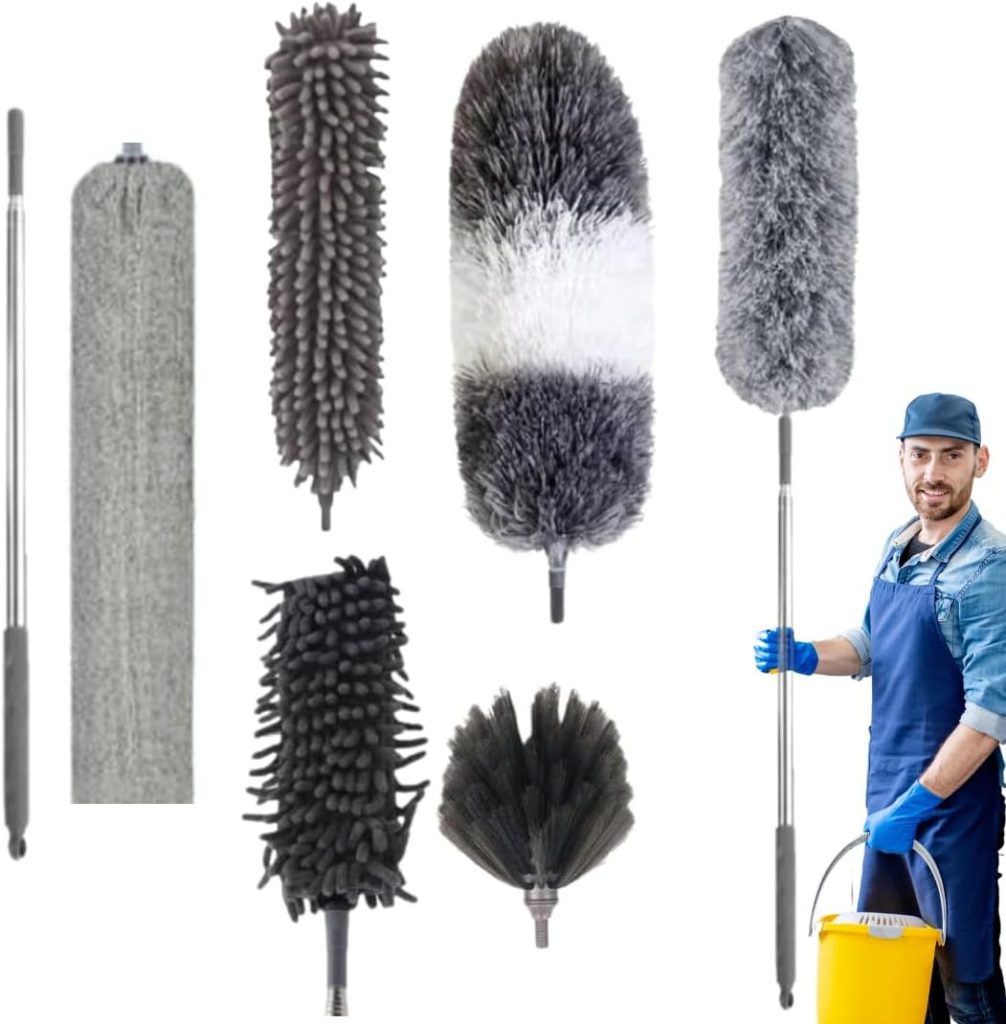
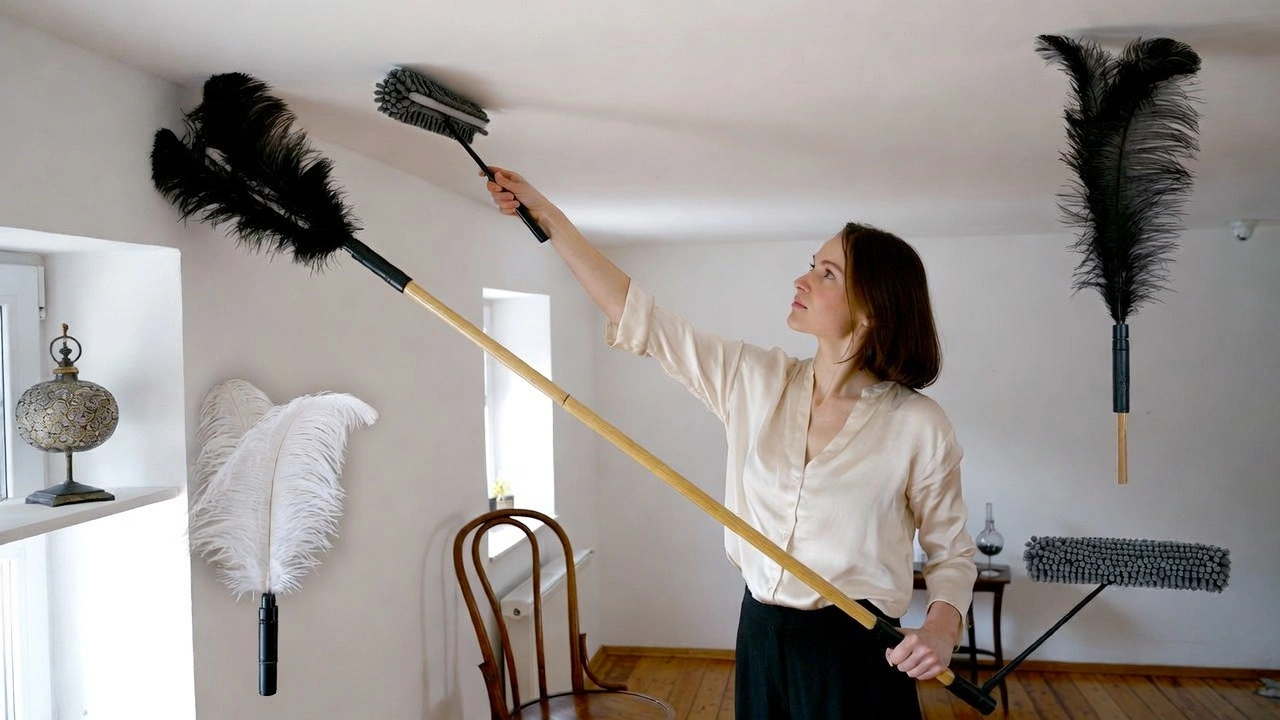
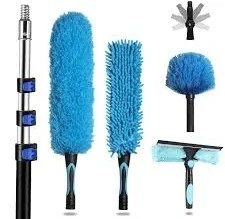
If you are looking for one complete tool that handles high ceilings, ceiling fans, light fixtures, wall corners, blinds, and shelves without needing a ladder, the 7-Piece Feather Duster Set with 30 to 100 inch extendable telescopic pole is the most versatile and effective cleaning kit available.
This all-in-one set includes seven interchangeable duster heads — featuring soft feather, microfiber, chenille, and specialized brushes — designed for different surfaces, along with a sturdy telescopic pole that securely extends from 30 to 100 inches (up to 8.3 feet of reach). This allows you to safely clean up to 14-foot ceilings and high ceiling fans from the floor, eliminating the risk of climbing or falling.
Microfiber U-Shape Ceiling Fan Duster
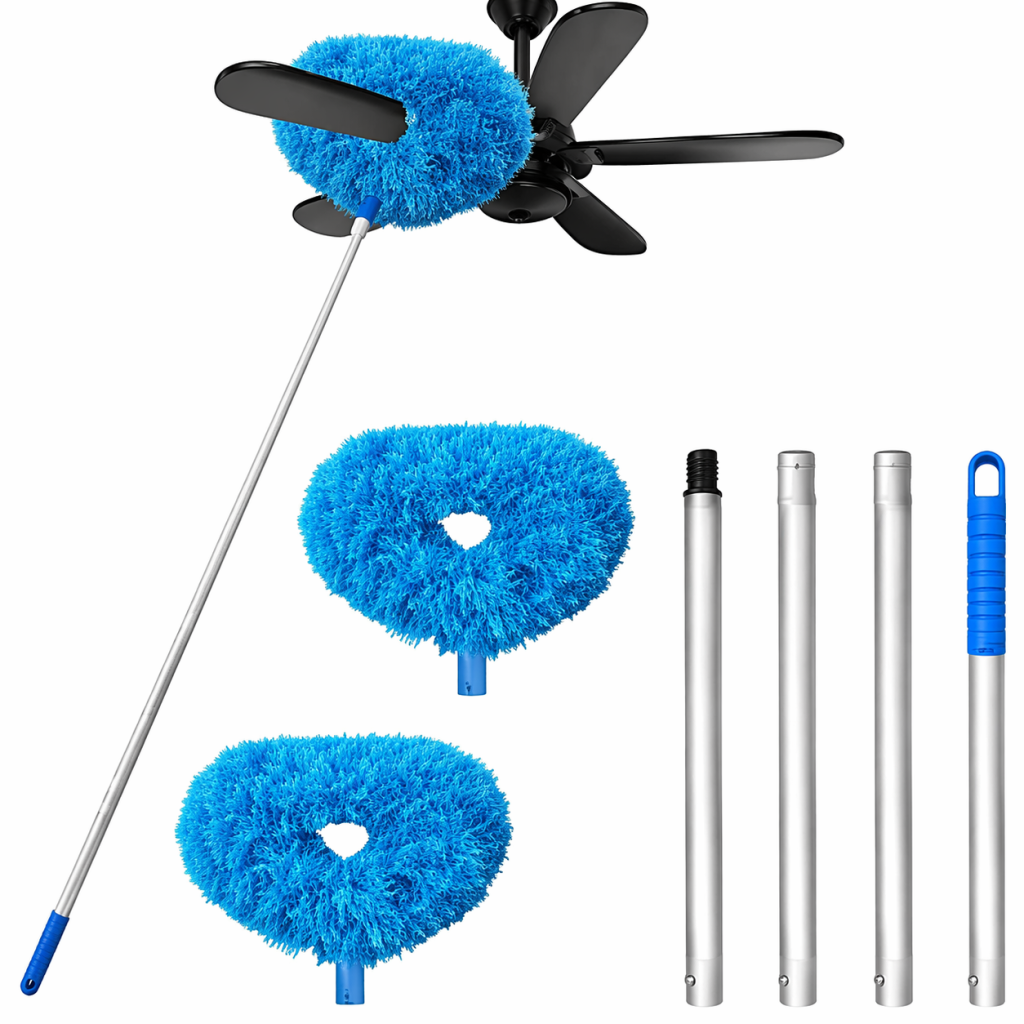
The U-shape microfiber duster is designed specifically for ceiling fan blades. Its curved shape wraps around the top and bottom of each blade simultaneously, cleaning both sides in one pass. It is an excellent choice for regular, quick maintenance of standard ceiling fans.
Most U-shape dusters attach to a basic extendable handle of around 40 to 50 inches, making them suitable for ceilings up to 10 or 11 feet. For higher ceilings, you will need a ladder. They are also limited to fan blades — they are not versatile enough for full ceiling cleaning, vents, or shelves.
Advantages
- Cleans both sides of a blade at once
- Good dust trapping performance
- Affordable and widely available
Limitations
- Not suitable for ceilings above 11 feet
- Only works on fan blades
- Requires washing after every few uses
3. Vacuum Cleaner with Brush Attachment
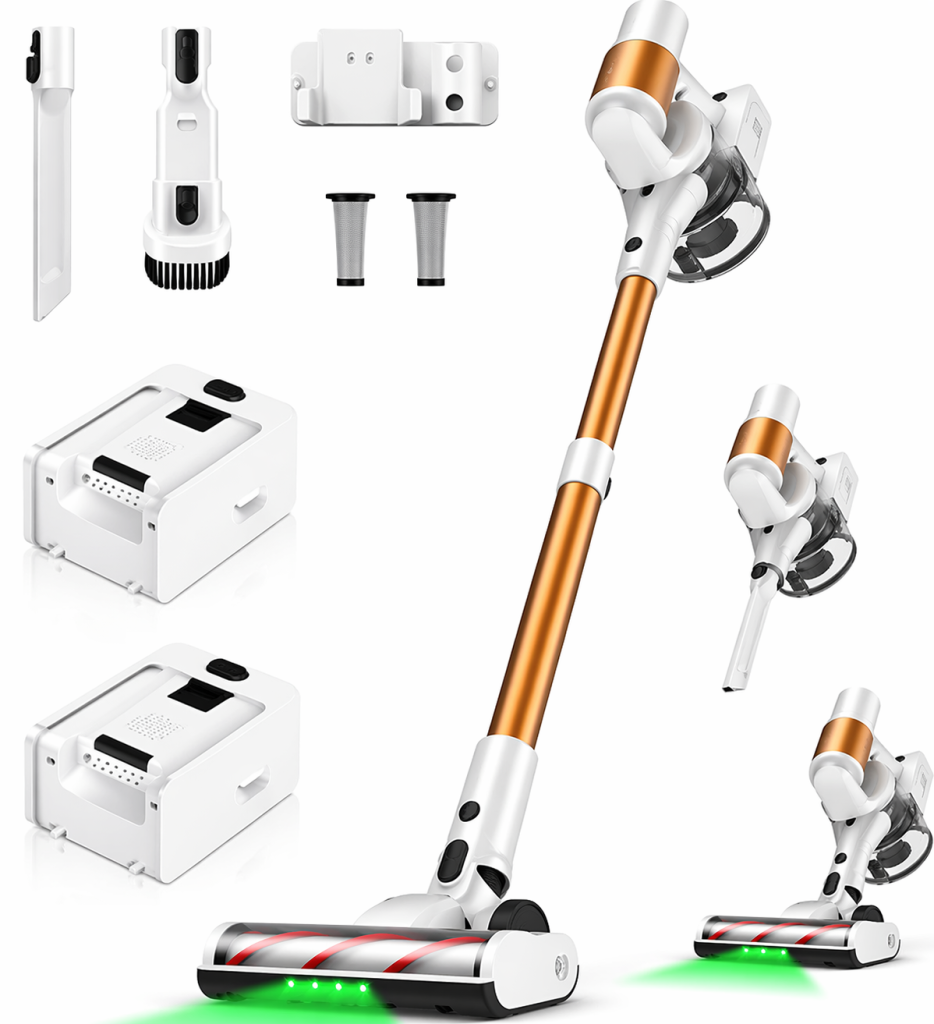
A vacuum with a soft brush attachment removes dust directly from the blade surface without releasing it into the air. It is the best option for households with allergy sufferers or asthma, because dust is captured rather than redistributed.
The main limitation is reach. Most vacuum hoses extend only 6 to 8 feet, which limits how high you can clean. For very high fans, you would still need a ladder, which reduces the safety advantage. It is also heavier and more cumbersome to maneuver than a duster pole.
Advantages
- Captures dust — does not spread it
- Ideal for allergy-sensitive homes
- Works well on heavily soiled blades
Limitations
- Limited reach without a ladder
- Heavy and harder to control at height
- Requires compatible vacuum system
4. The Pillowcase Method
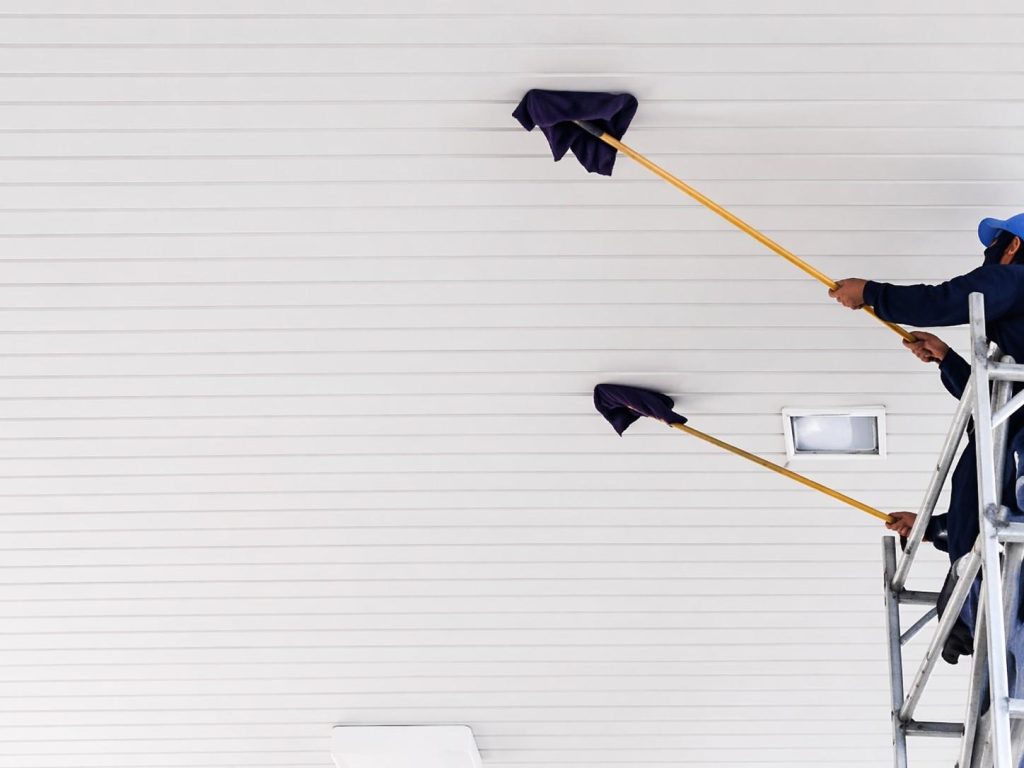
The pillowcase method is a no-product cleaning technique. You slide an old pillowcase over each blade, press gently, and pull it back — trapping the dust inside the case rather than letting it fall onto furniture below. It is a useful trick for medium dust buildup on standard-height fans.
However, it requires a stable ladder to access the blades, which makes it unsuitable for high ceilings. It is also slower because you have to handle each blade one at a time and wash the pillowcase afterward.
Advantages
- Zero cost — uses an item you already own
- Good dust containment
- Easy to understand and perform
Limitations
- Requires a ladder — not for high ceilings
- Slow — one blade at a time
- Not effective on sticky grime
5. Microfiber Cloth with Cleaning Solution
For fans with sticky or greasy residue — common in kitchens or humid climates — a microfiber cloth with a mild cleaning solution is the most effective deep-cleaning method. Dampen the cloth with a mixture of warm water and mild dish soap, wipe each blade carefully, then dry with a clean cloth to prevent streaks.
This method works best as a periodic deep clean, paired with a regular dusting routine. It is not suitable for high ceilings without a ladder and is the most time-intensive method on this list.
Advantages
- Removes sticky, greasy, or heavy grime
- Leaves blades thoroughly clean
- Low cost
Limitations
- Requires ladder for high ceilings
- Most time-consuming method
- Risk of moisture damage if not dried promptly
Step-by-Step: How to Clean High Ceiling Fans with an Extendable Duster
A clean ceiling fan improves air circulation and keeps your living space healthier.
Using the 7 Pcs Feather Duster Set with an extendable pole is straightforward. Follow these steps for the best result:
Turn Off the Fan and Wait
Switch off the ceiling fan at the wall or remote. Wait until the blades stop completely — this usually takes 20 to 30 seconds. Never clean a spinning fan.
Lay a Drop Cloth Below the Fan
Place an old bedsheet, drop cloth, or large plastic sheet directly underneath the fan. This catches any dust that falls and makes cleanup quick and easy.
Attach the Right Duster Head
From your 7-piece set, select a feather or microfiber duster head. For dusty blades, the feather head works best. For sticky residue, choose the microfiber option.
Extend the Pole to the Right Length
Adjust the telescopic pole to a comfortable length. You should be able to reach the fan blades without stretching. Lock each pole section firmly before use.
Clean Each Blade From Base to Tip
Position the duster at the base of one blade where it meets the motor housing. Glide smoothly outward toward the blade tip.
Apply light, even pressure. Repeat on each blade, working around the fan in one direction.
Clean the Motor Housing and Light Fixture
With the same duster or a smaller head, clean the top of the motor housing and any light fixtures attached to the fan. Dust collects heavily on top surfaces that are not visible from below.
Address the High Ceiling Corners and Surfaces
While the pole is extended, use a wide brush head to clean cobwebs and dust from ceiling corners, crown molding, and any ceiling fixtures.
This is where the 100-inch reach of your extendable pole becomes especially useful.
Shake Out and Clean the Duster Head
Take the duster head outdoors and shake it firmly to release trapped dust. Most heads are also machine washable — check the care label on your specific set.
Fold and Remove the Drop Cloth
Carefully fold the drop cloth inward to contain the dust that has fallen on it. Take it outside to shake clean, or place directly into the washing machine.
Safety Tips for Cleaning High Ceilings

Important: Falls from ladders are one of the most common causes of serious home injuries. Whenever possible, choose a tool that eliminates the need for a ladder entirely.
Regardless of which tool you use, always follow these safety practices:
- Never clean a fan while it is running. Even slow-moving blades can cause injury and will push dust into the air.
- Choose ground-level tools where possible. An extendable pole eliminates ladder risks entirely for ceilings up to 14 feet.
- If a ladder is necessary, ensure it is stable. Use a step ladder on a flat surface and never stand on the top two rungs.
- Apply gentle pressure only. Heavy pressure can bend fan blades out of alignment, causing wobbling when the fan operates.
- Do not spray liquid directly onto the fan. Moisture can damage the motor. Always apply cleaning solution to a cloth first.
- Work slowly and deliberately. Rushing leads to both poor cleaning results and increased accident risk.
- Wear a dust mask if you are sensitive to dust or allergens. Even with good dust-trapping tools, some particles will become airborne.
How Often Should You Clean Ceiling Fans?
The right cleaning frequency depends on your environment and how often the fan runs. As a general guideline:
- Every two to four weeks: For homes in dusty climates, areas near construction, or homes with pets.
- Once a month: For standard apartments and homes with moderate dust levels.
- Every six to eight weeks: For rooms where the fan runs infrequently or where air filtration is good.
- After any dusty event: After sanding, renovation work, or sandstorms — regardless of your regular schedule.
A fan that is cleaned regularly takes only a few minutes to maintain. A fan that is neglected for several months requires much more effort and may need a full wet cleaning to remove built-up grime.
Frequently Asked Questions
Conclusion
Cleaning high ceilings and fans doesn’t have to be difficult, dangerous, or time-consuming. With the right tool, you can do the job safely and quickly from the ground.
The 7-Piece Feather Duster Set with a 30 to 100 inch extendable telescopic pole is the best overall solution. Its seven interchangeable heads, impressive 100-inch reach, and effective dust-trapping microfiber and feather materials make it far more versatile and efficient than single-head dusters.